
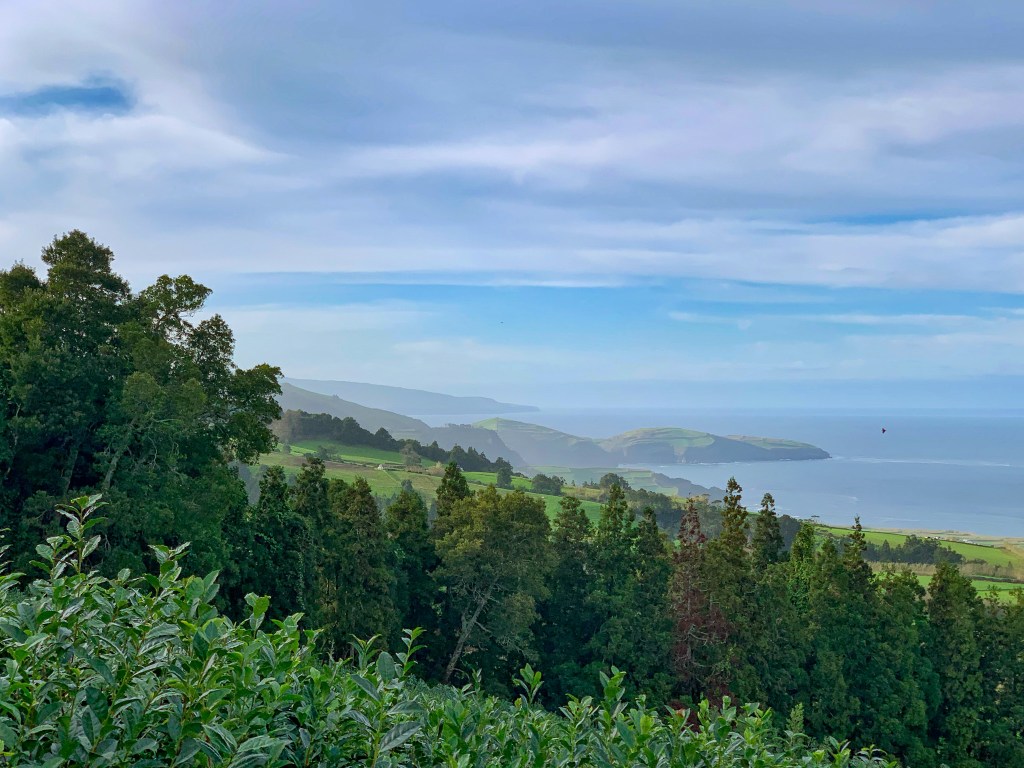
The road from Nordeste at one end of the island of São Miguel to the capital Ponta Delgada is pretty new. It takes about 45 minutes from one town to the other, a journey that in previous centuries would have taken a couple of days by cart or on foot. But we have come the long way round, a winding road above the cliffs and through the forest, stopping at lookout points to spy other islands of the archipelago on the horizon and the white horses breaking on the surface of the Atlantic below. It has been a long day, and we are in need of a break and a nice cup of tea.
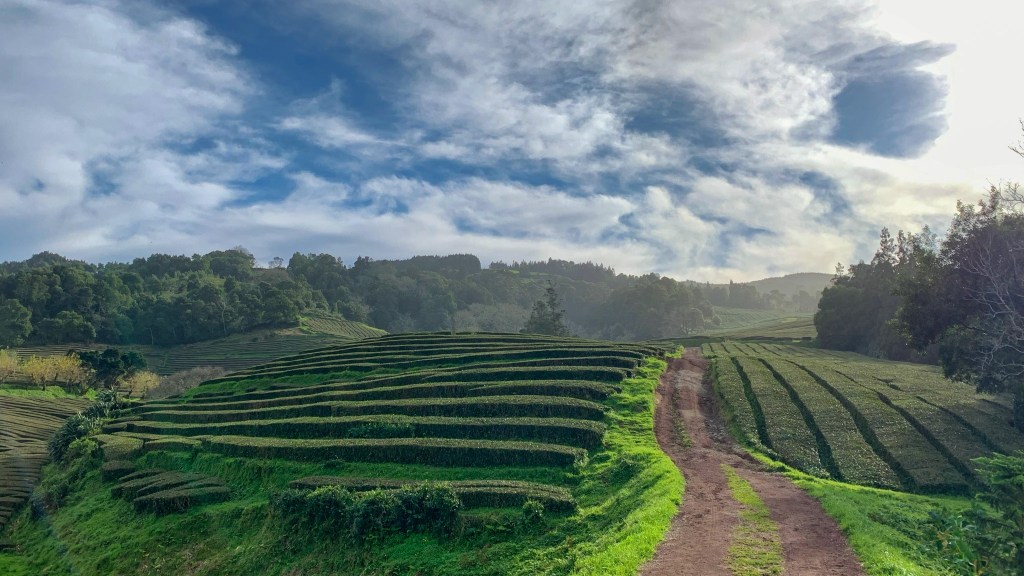
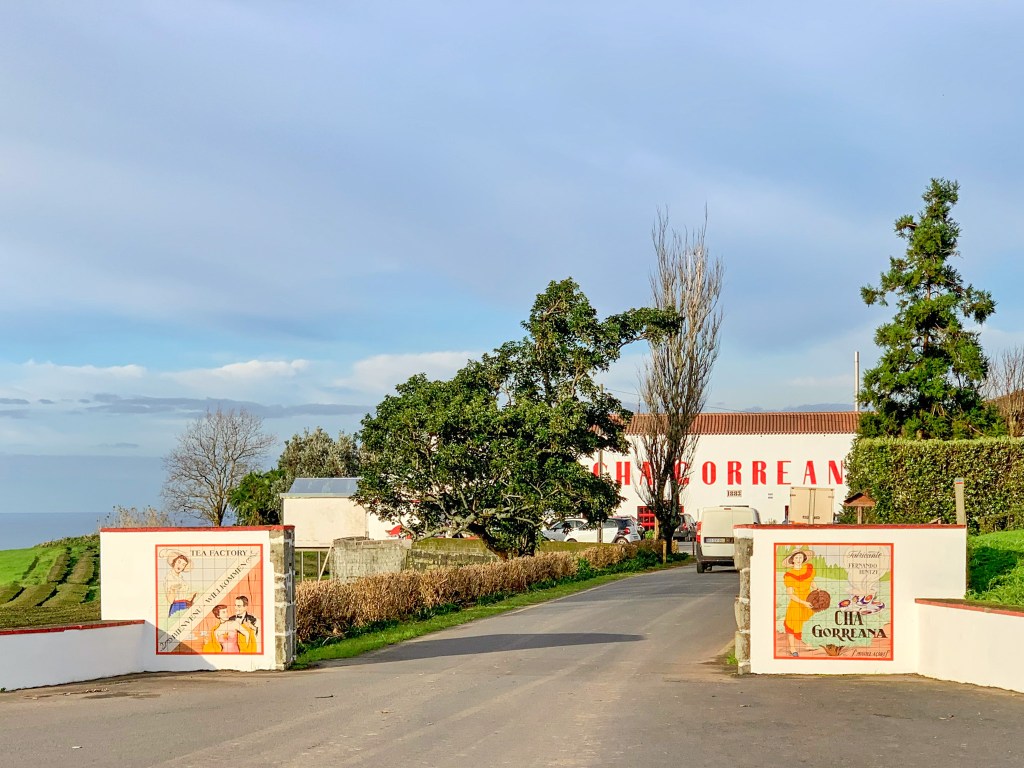
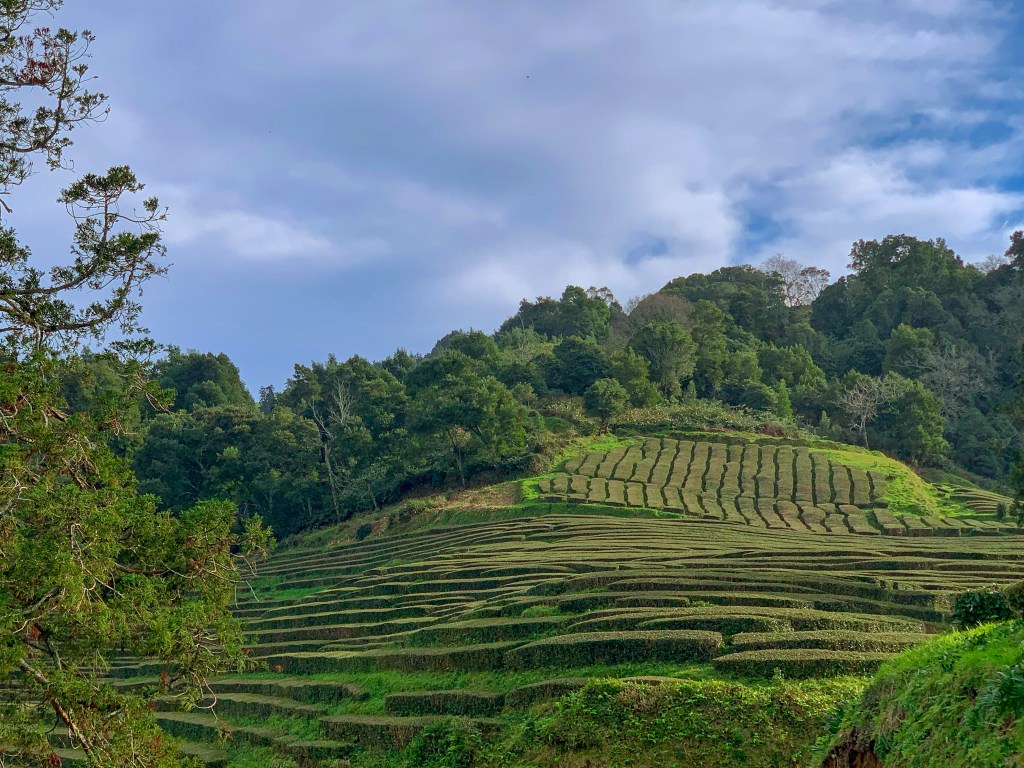
As the road turns in a long, sweeping bend, the plantation rises up in front of us. Row after neat row climbs the hillside towards the ridge line above, while the Atlantic Ocean stretches out into the offing below. We pull into a dusty car park in front of a whitewashed building that is home to Europe’s oldest tea factory that is still in operation. Indeed, for a long time the Gorreana tea factory on São Miguel was the only place where tea was made in Europe. But an old plantation a few kilometres down the road has more recently been resurrected and, according to the young man showing us around, climate change means that a commercial plantation is open, or about to open (he isn’t sure) in Scotland.
Which makes sense, he says with a wry smile, given how much British people like a cup of tea and the fact that almost all of the equipment used in the Gorreana Tea Factory was produced in the factories of Liverpool and Glasgow. Many of them, he explains as we walk through the echoing factory, were originally built to select and sort tobacco leaves, but have long been pressed into service for less carcinogenic pleasures.
He tells about how the factory was opened in 1883 and makes both green and black teas, and how they come from the same plant, growing up there on the hillside. In a back room a group of women are doing the finest selections that even the trusty machines are not capable of, while a set of samovars gives visitors the chance to try the different teas for free. Of course, the young man continues, we have to go and explore the plantation while we are here. And so, after a quick cup of tea in the factory, we cross the road and head up into the rows.
The 32 hectares of the Gorreana Tea Factory produce around 40 tonnes of tea a year, and a five-kilometre walking trail guides visitors up the steep hillside and through the plantation. As we walk, men are working to trim some of the bushes to encourage faster growth, and on different plants along the way we can see them at different stages of their cultivation.
As with so many places on the Azores, the hillside of the Gorreana tea plantation tells a small but important part of the whole story of what it means to settle on volcanic islands in the middle of the ocean, and the trials and tribulations of making a life on these lonely rocks. For a long time, the wealth of São Miguel was tied to oranges. At its peak in the middle of the 19th century, something like sixty million oranges and fifteen million lemons were exported from the islands, mainly to Britain. In Victorian London they were luxury items, and the English merchants who traded in them made fortunes with which they settled on São Miguel with their families in mansions built from their handsome profits.
But spend any time on the history of the Azores and it becomes clear that while good times can come they can also just as quickly go, which in part explains the ebb and flow of emigration and return to the islands, most notably to and from Brazil, Canada, the United States and, of course, Portugal. In 1860, disaster arrived in the form of a tiny insect that had hopped a ride on a boat from Brazil. Known as Coccus hesperidum, it had devastated the orange plantations within two decades and plunged São Miguel into an economic crisis.
Thanks to the Sociedade Promotora da Agricultura Micaelense (SPAM), the islanders began experimenting with new crops. Tobacco (hence the machines). Sweet potatoes (for alcohol). Beets (for sugar). Pineapples grown in greenhouses that are to this day celebrated as some of the best in the world (or so they say). And of course, tea. In the beginning, people in the Azores thought the tea was nothing more than a decorative plant, but thanks to a Chinese tea master by the name of Lau-a-Pan, who had been hired by SPAM along with an interpreter, tea production on the island began to boom.
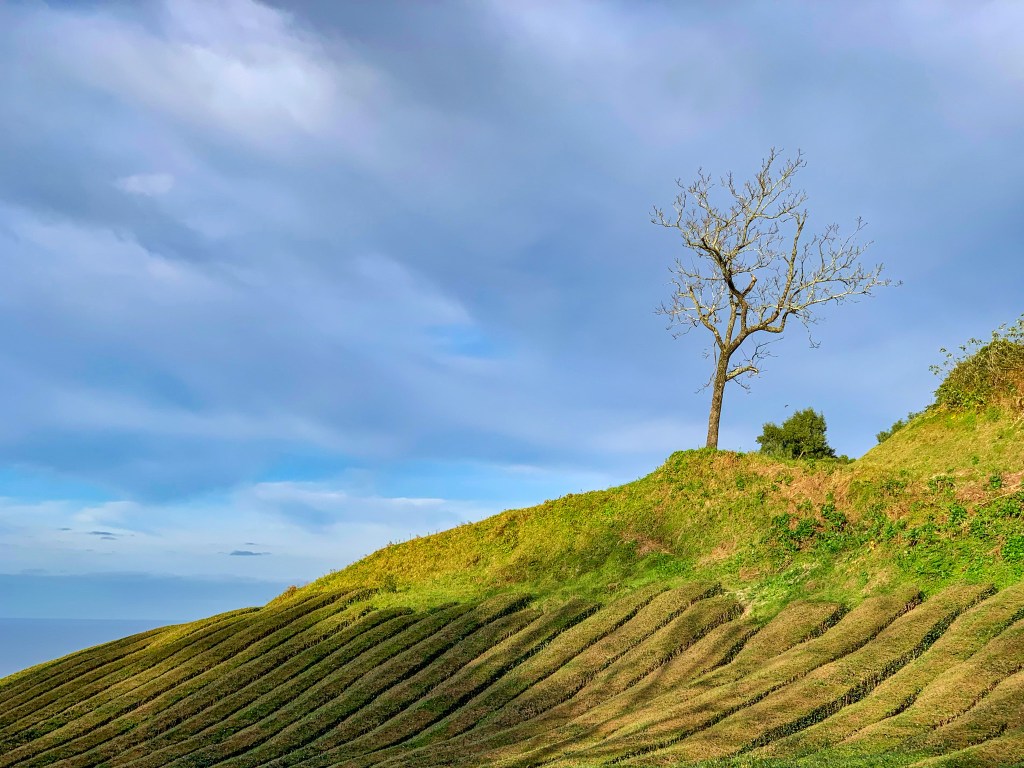
At its peak about a hundred years ago there were fifty plantations on São Miguel serving ten different factories, but now there are only two. And while Gorreana cannot compete on price with the larger tea companies out there, as we walk along the dusty red tracks between the neat rows of bushes, it is nice to know that there is still a place for a family business like this, making the steep hillsides and volcanic soil work for them, and the tea drinkers around the world.
Back in the factory we buy some tea to take home with us. It means we will still have a chance to be connected to this place long after we have left, with a cup of something hot at our desk or on the couch, finding our way back through memory to this hillside in the Azores, walking the rows with a view down to the villages above the Atlantic and the waves rolling in below.
Words by Paul Scraton
Photographs by Katrin Schönig
