
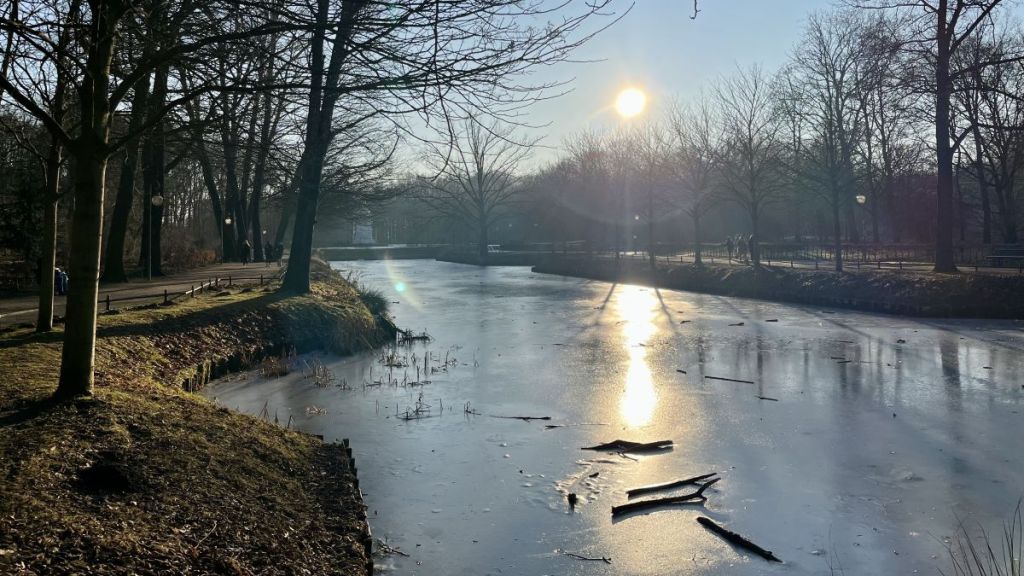
Winter arrived in all seriousness in the early hours of the year and has held our corner of Europe in its grip for more than a month. There are days when the pavements are as treacherous as ice rinks, when the trams are halted because their power lines are frozen, and when the only message from the people you hope would be able to deal with all of this is to simply stay at home unless you really need to go out.
But a Berlin winter is grey enough without spending some time in the fresh air. So we head out across town towards the Tiergarten, the huge park at the heart of our city, the green lungs of the German capital between the Brandenburg Gate and the zoo, where gravel paths criss-cross the forest and meadows, skirting ponds and flanked with statues of those whose greatness is memorialised in marble.
For the first time for what feels like weeks the sun has emerged from behind its gunmetal screen for at least a couple of hours before darkness returns. The soft light catches the ice on the canals and the ponds, the frozen edges of tracks laid by bike wheels and winter boots, and warms the faces of those who have taken the chance on a Sunday afternoon outside the cosy confines of their apartment or the neighbourhood cafe.
It is the coldest winter since 2010, and it reminds me of those early winters when I first moved to Berlin almost a quarter of a century ago. Waiting at the tram stop on the way for a breakfast shift in the cafe, the temperature outside the chemist shop on the corner registering minus fifteen. Sledging down rubble mountains to a backdrop of Plattenbau on the edge of Prenzlauer Berg. Taking the train to Potsdam and walking through gardens blanketed in white, the famous statues locked away in plywood boxes to protect them from the cold.
A long time ago, and in the meantime, it feels like we have forgotten how to deal with winter. The impact of the climate crisis can feel like it creeps up slowly, and it’s only when you try and remember the last time the weather was like this that you realise how much it has changed. And collectively, we are no longer prepared. As I write these words, Berlin’s airport has come to a standstill… again. We started the year stranded in the Netherlands, reading articles from The Hague about how the country has forgotten how to deal with snow. We failed to protect our winters, and now we don’t know how to handle it when it makes a ghostly return.
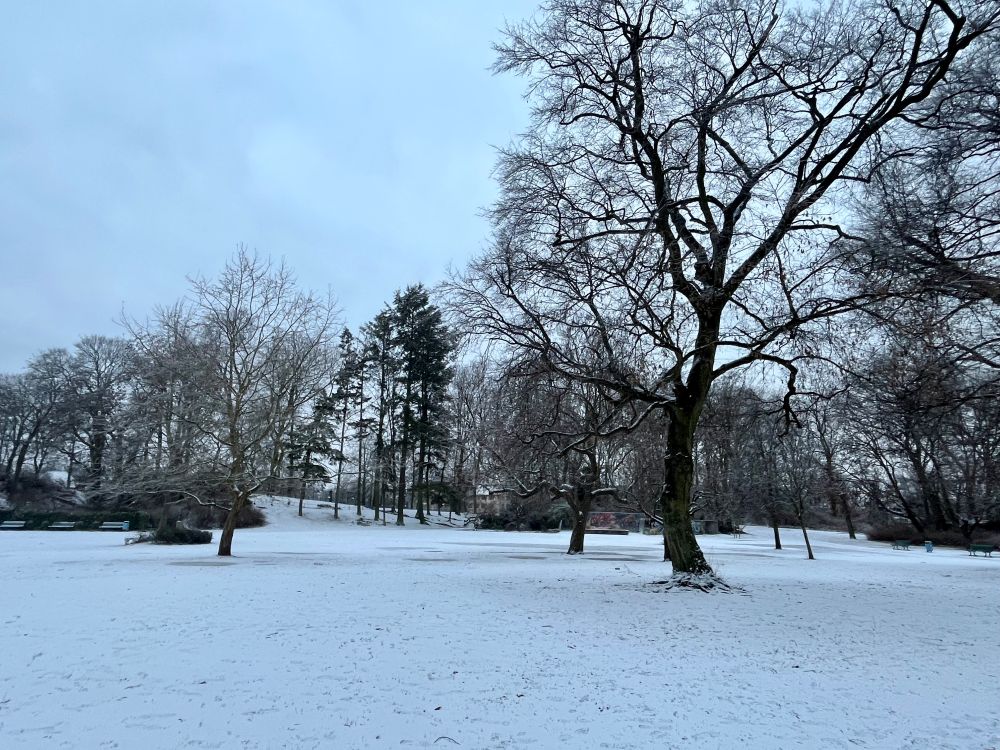
And if it takes the return of something that was once pretty normal to make us realise what has been happening, the signs are all the more obvious if we travel beyond the plains to the mountains. Glaciers in the Alps will reach their peak rate of extinction as soon as 2033. In North America, that date will come about a decade later. The loss of glaciers results in sea-level rise and a shortage of freshwater. The loss of ice and snowpack makes mountains more unstable. In Nepal, climate change has caused shifts in the monsoon, erratic weather patterns and an increase in deadly landslides. In general, mountains are warming between 25 and 50 per cent faster than the global average.
This evening, athletes around the world will come together in Milan to celebrate the opening ceremony of the Winter Olympics. But anyone who loves winter sports, whether in the mountains themselves or on television on a lazy Sunday afternoon, will know how much the landscape has changed over the past few decades. It is not uncommon to see pristine white ski runs against an otherwise bare mountainside. Resorts are closing due to an ever-shortening season, and the resources needed to keep them open in the short term, are making an oversized contribution to why they will be unviable in the future.
In 2007, professional snowboarder Jeremy Jones founded Protect Our Winters in North America, and the organisation became active in Europe in 2013. “Anyone of us who spends time in the mountains can see the negative effects of climate change on our snowlines, our snowpacks and our glaciers,” Jones writes on the website. “The reason I founded Protect Our Winters was to unite the industry to take action on climate, and to turn international winter sports participants & athletes into climate advocates.”
As the athletes try to do their best in the Italian Alps, Protect Our Winters have made it starkly clear what the future holds. Every location that has hosted the winter games has warmed since 1950. By 2050, the number of sites that are capable of hosting a Winter Olympics will have shrunk by 44 per cent. As POW states: “For an event that depends on reliable winter conditions for safety, fairness and performance, reducing the Games’ climate and environmental impact is paramount for its very existence.”
Whether or not the winter games can continue is not the key issue, when compared to the devastation of communities by unstable ground, the destruction of fragile ecosystems, and the global impact of sea-level rises and fresh water shortages. But with the eyes of the world on Milan-Cortina, it is a chance to tell an important story of something that will impact us all, whether we live high on the mountainside or down on the plains.
Thanks for reading,
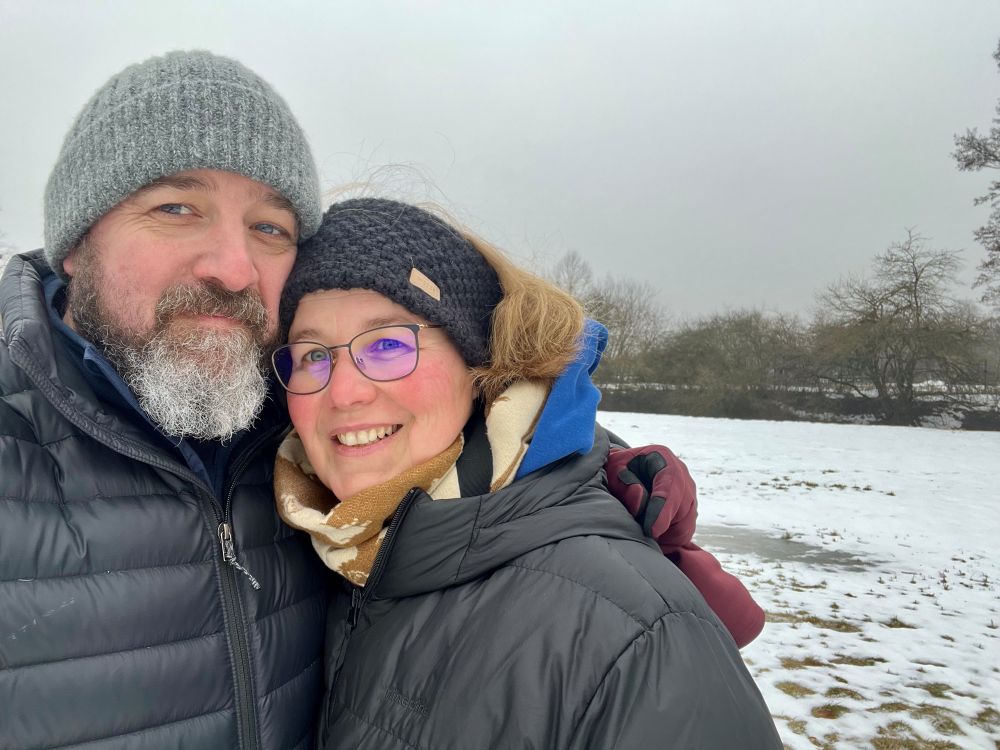
Paul & Katrin
Berlin, February 2026
New on The Winding Trail: Since we last sent out a newsletter, we have published the story of our “accidental” trip to the Netherlands, and how memorable experiences can come even when the best laid plans go awry. We also added to our selection of personal and highly subjective mini-guides. This time around we thought we’d share our favourite ways to get outdoors in our hometown of Berlin, whether in deepest winter or the height of summer.
