
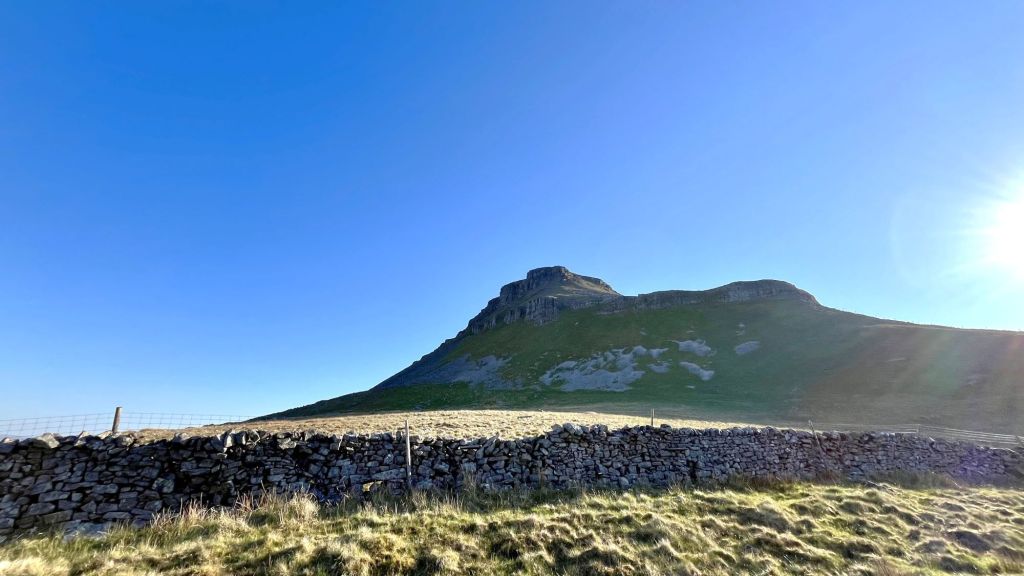
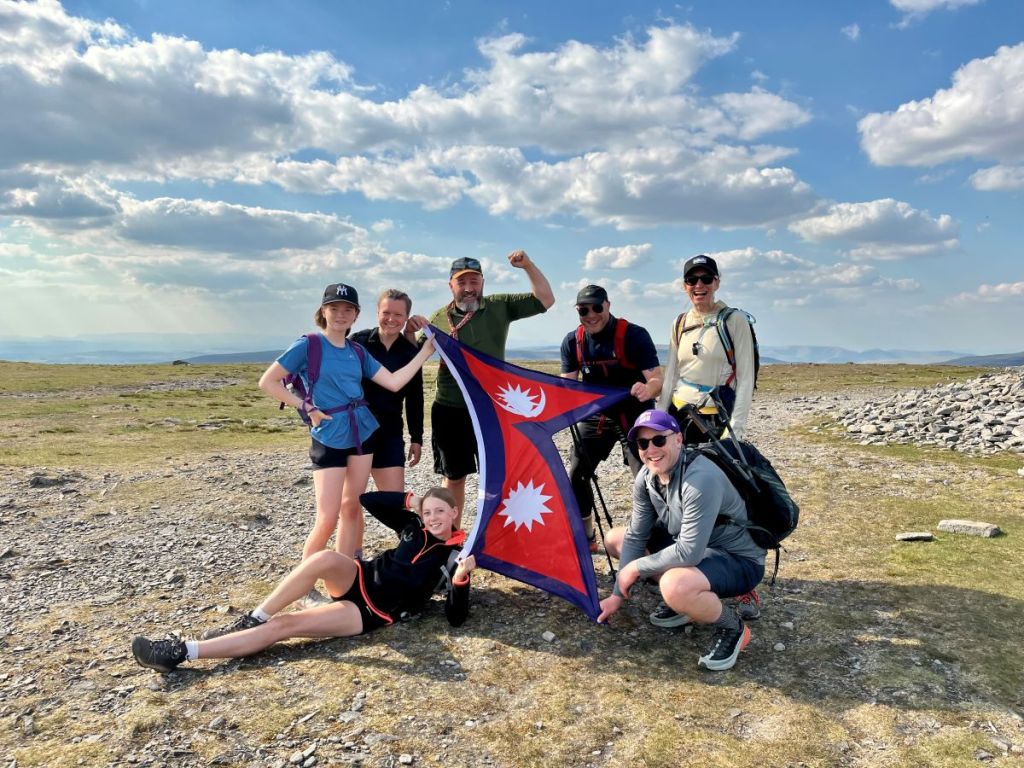
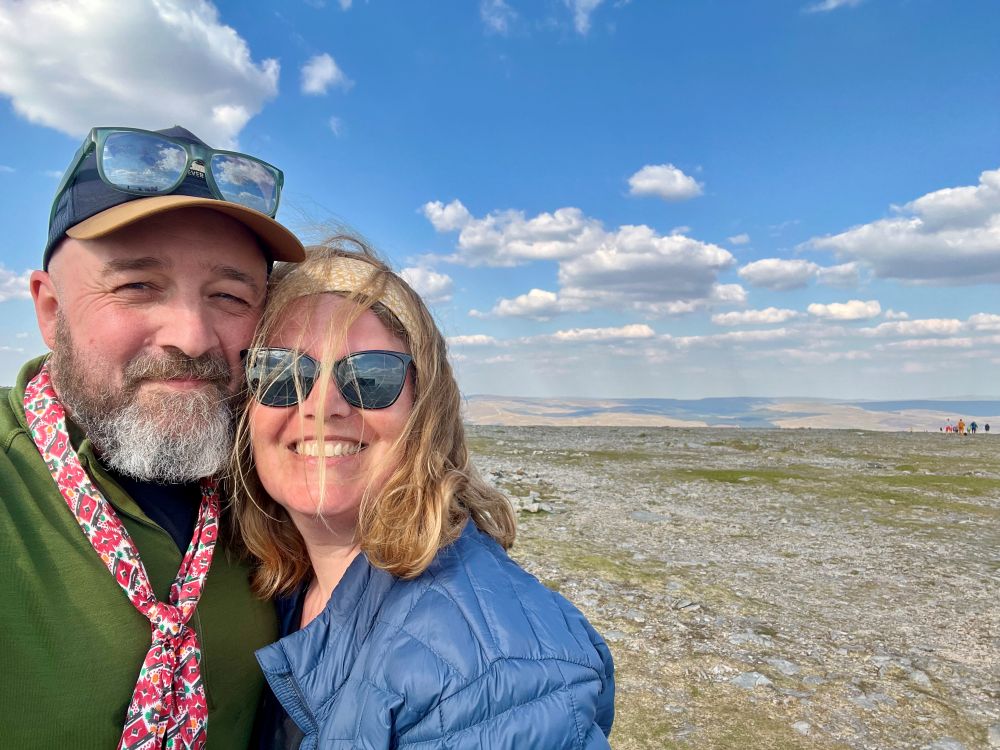
At the top of Pen-y-ghent we catch our breath and turn our faces to the morning sun. It seems like we have only just begun our walk, and the summit of the first of the three peaks is already beneath our feet. We unfurl our Nepal flag for a photograph. A slim man in shorts is standing next to us, eating a banana. He asks about the flag. We tell him why we are walking. He nods and takes another mouthful. Once he has finished he speaks again.
‘I’m walking for Macmillan,’ he says, referring to the cancer charity. ‘My mum, you know…’
He trails off and looks out across the moorland.
We all have our reasons for being here today.
Just beyond the summit cairn the path begins to snake its way down to the valley floor. It’s a beautiful, clear day, and the sandy coloured track runs away from us across the fields and the moor toward Ribblehead village in the distance. The hikers who are ahead of us, those who reached Horton earlier than we managed, or who are moving faster than our group, can be spotted as little specks of colour moving along the trail. It’s not the busiest day of the year on the Yorkshire Three Peaks, but there are plenty of us who have come to take on the challenge.
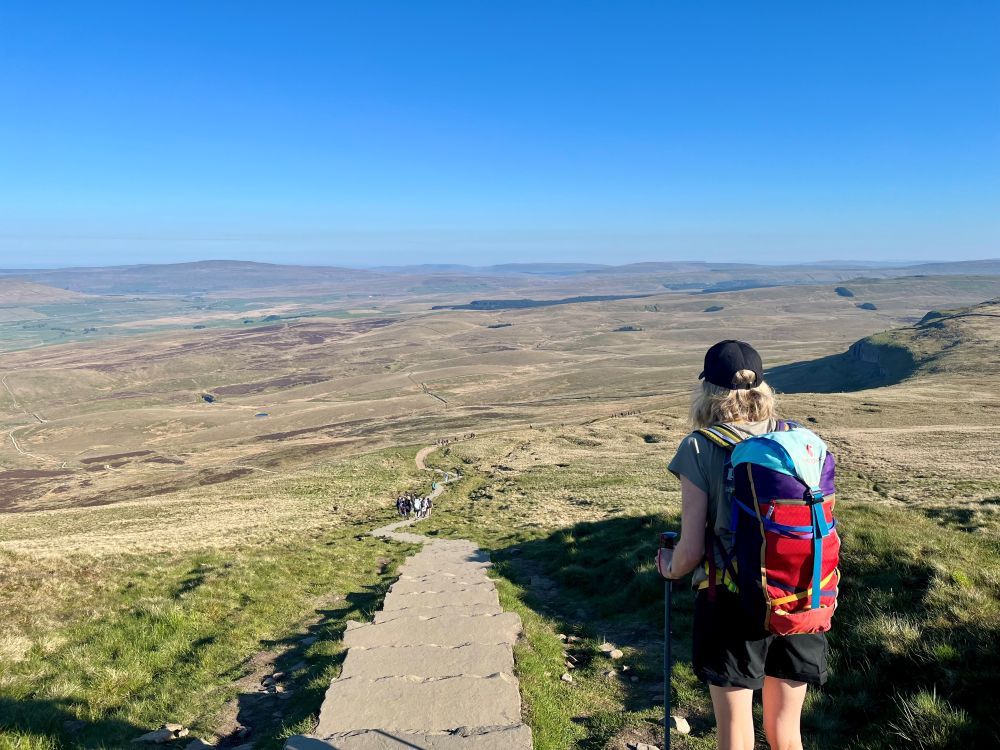
Our group splits and breaks off into smaller parts, stretching out before coming together again at different rest points. There is time on the trail, so much time, to talk and share ideas. We only get our phones out for pictures, and for the rest of the day we are in the here and now, sharing stories and memories. Some of us have met for the first time this morning, but there is nothing like twelve hours on a long walk to accelerate the process of becoming friends. People talk differently when they are walking side by side. More openly? More honestly? Or perhaps it is simply the growing tiredness throughout the day that makes it ever harder to put up barriers between each other.
At Ribblehead we meet our family and friends who have come to support us. To fill up our bottles and give us our sandwiches and a pep talk. Some will walk the next peak with us. The younger members of our party are itching to go. They skip ahead. What’s all the fuss about? A group of young women, strong and confident. They tease us and race on as the path makes its long looping way up the mountain. They could run up Whernside if they wanted to. No bother. They are an absolute pleasure to be around.
Another peak, another unfurling of the flag. More questions. Just over the wall is Cumbria. The Yorkshire Dales rubbing up against the Lake District. The path follows the ridge before dropping steeply back down into the valley.
‘Mind how you go,’ someone says, walking in the opposite direction. A few moments later, when we spot the Fell Rescue team loading a pale woman onto a stretcher, we understand where his warning came from. It’s time to concentrate.
Knees shaking, we reach the bottom. Ice cream and another rest. We could just stop here. But Ingleborough is standing above us. You’ve come so far, the mountain seems to be saying. Just one more push. So we join the line heading up to the third of the three peaks. The finish line is not yet in sight, but it’s not far away now. We share more stories. Chat to more strangers. We are all in it for different reasons, but we’re all in it for the same goal.
See you at the top?
The girls are already up there, waiting for us to catch up.
Why walk the Yorkshire Three Peaks?
This circular route in the Yorkshire Dales does what it says in its name. Regardless of where you start or finish, you’ll climb three peaks: Pen-y-ghent (694m), Whernside (736m) and Ingleborough (723m). Unlike the other “Three Peaks” challenge (the highest mountains in Scotland, England and Wales), the Yorkshire peaks are all pretty much next to each other, and it has become one of the great one-day outdoor challenges in the UK.
Its accessibility and well-marked trails mean that it has become an incredibly popular charity challenge, and on busy summer weekends it can feel like you’re taking part in something more similar to the London Marathon than a wild outdoor adventure. But if you accept it for what it is, and embrace the fact that you too are one of the crowd, chat to strangers and soak up the sense of communal suffering and the fact that you are all in it together, it can be a day to remember.
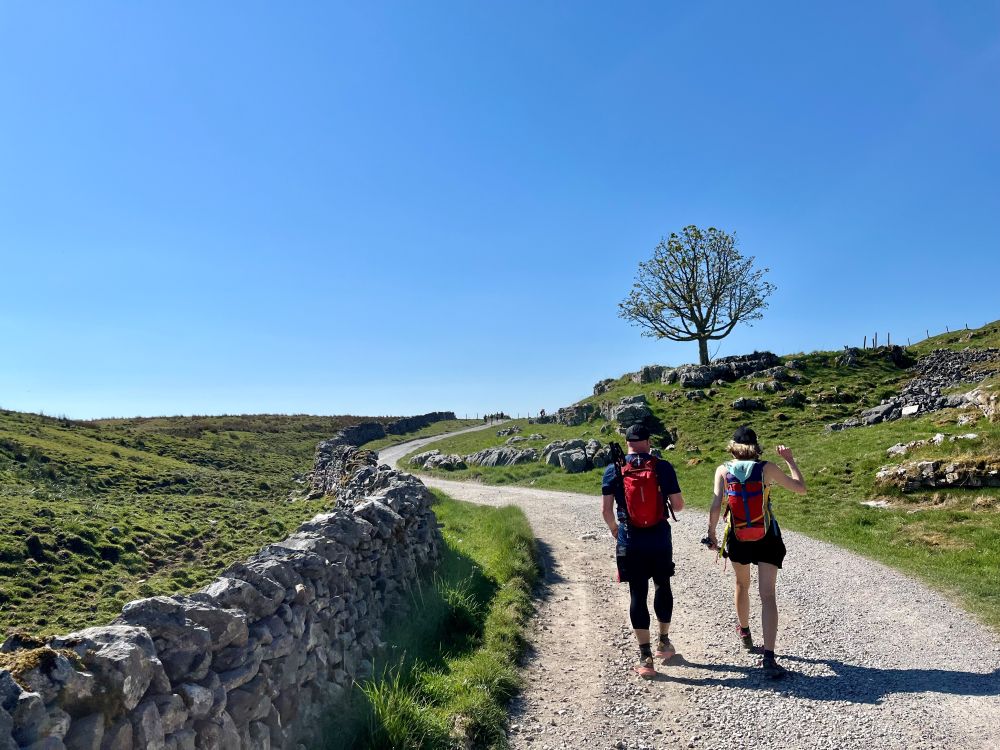
We would not like all our outdoor experiences to be like this, but the sense of community was quite something to be part of, and however many people you are sharing the summit with, the sweeping views across the moors, not to mention standing in the shadow of the iconic Ribblehead Viaduct, all made it well worth the effort.
What’s it like?
We took on the challenge with a group of friends as part of Pahar Trust Nepal’s #WalkForNepal campaign. We were raising money to build two schools in rural communities, and we had this as motivation all the way around. One of the great things about the Yorkshire Three Peaks is access to the route at different points. This meant that we had a mix of people in our group: some of us doing the whole thing, others doing one or two peaks, and yet others who provided much needed support and motivation in the valley.
We needed it. The Yorkshire Three Peaks challenge is tough. At almost 39 kilometres (24 miles) it is pretty much a marathon in distance with 1,585 metres of ascent/descent. Most people aim to finish it in around twelve hours, so it is a long day, and with a mixed terrain including some very steep as well as grassy and boggy sections, it can be incredibly draining and physically demanding for all but the fittest of hikers or trail runners.
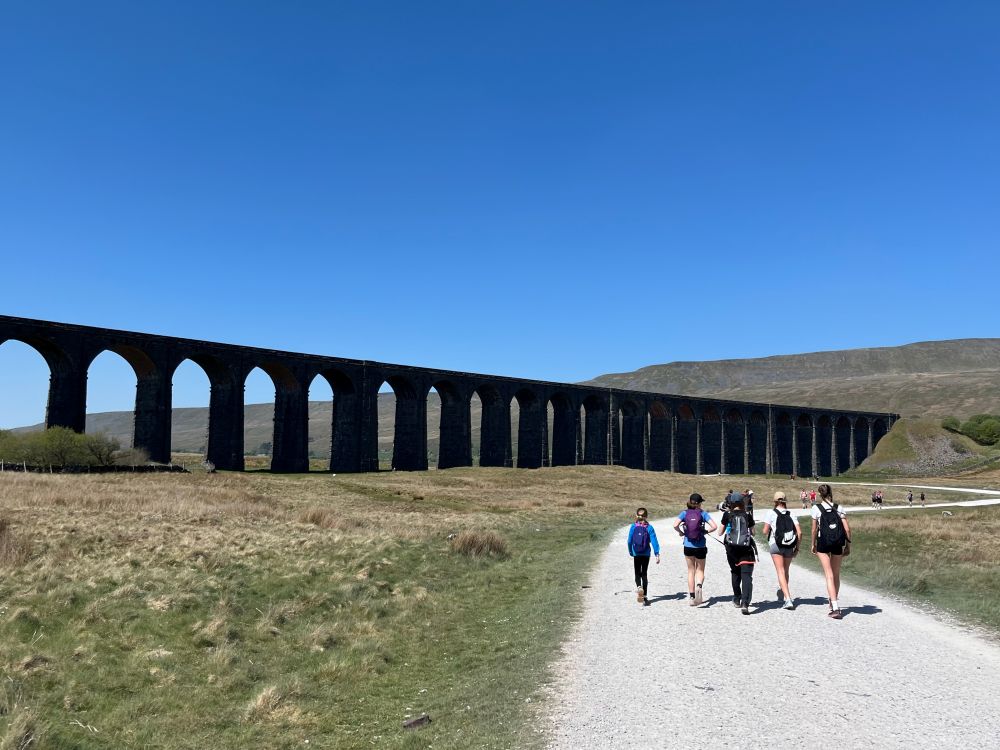
And yet! We took on the Yorkshire Three Peaks on a glorious May weekend, setting off from Horton-in-Ribbleside in sunshine that took us through the morning until the cloud approached as we climbed Whernside, just in time to give us a bit of much-welcome shade. The views from the tops of all three peaks were spectacular, and especially from Whernside, where it was possible to see across to the Irish Sea glittering in the distance.
The only really difficult bit was the very end, as the long rocky path down from Ingleborough to Horton seemed to take for ever, and the legs were pretty tired by then, but the sense of achievement as we all came together at the end, back where we had started twelve hours earlier, was a feeling we’ll never forget. And the beers in the pub, nor the fish and chips on the way home, have ever tasted better.
How and when to do it
We’ll admit it here: we got lucky with the weather. One of our friends was taking part in the Yorkshire Three Peaks challenge for the second time, and his report of the first experience was full of torrential rain, leaking overtrousers and visibility down to a handful of metres. It didn’t sound like much fun. So aiming for late spring or early summer, when the daylight hours are the longest and there is a better chance of a dry day is probably a good idea.
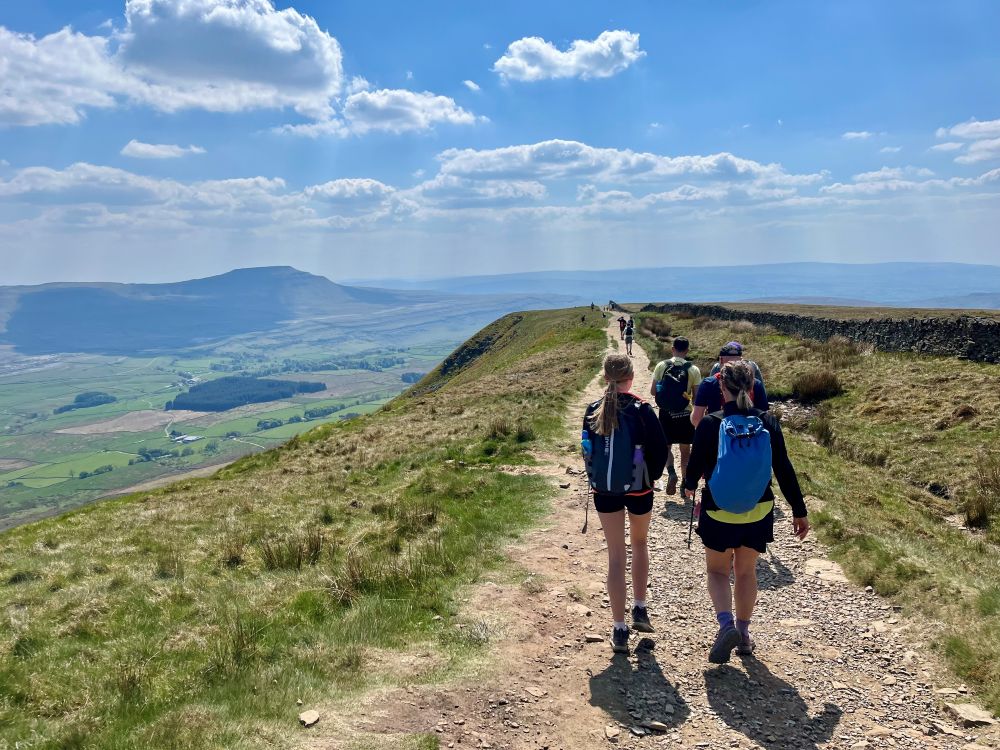
At the same time, the popularity of the walk for charity challenges means that it can get incredibly crowded on fine summer weekends or bank holidays. We wanted to maximise participation in our group, so we also picked a Saturday, but if you can manage to do it on a weekday then you’ll find the trails a lot quieter.
The traditional way to do the Yorkshire Three Peaks is to start in Horton-in-Ribbleside and walk anti-clockwise along the trail, climbing Pen-y-ghent, then Whernside and then Ingleborough. This is how we did it, and the advantage is that you get the first peak ticked off pretty quickly (which is good for morale) and you get the longest hike across the valley done while you are still pretty fresh.
Another option would be to set off from Ribblehead rather than the traditional start in Horton. This would mean you would be ahead of the crowds, although you will have the long slog across the valley from Pen-y-ghent to Ribblehead as the final, potentially soul-sapping stage of your adventure. Other people have attempted to avoid the crowds by walking clockwise around the route, starting really, really early in the morning, or simply braving the weather to take on the challenge out of season.
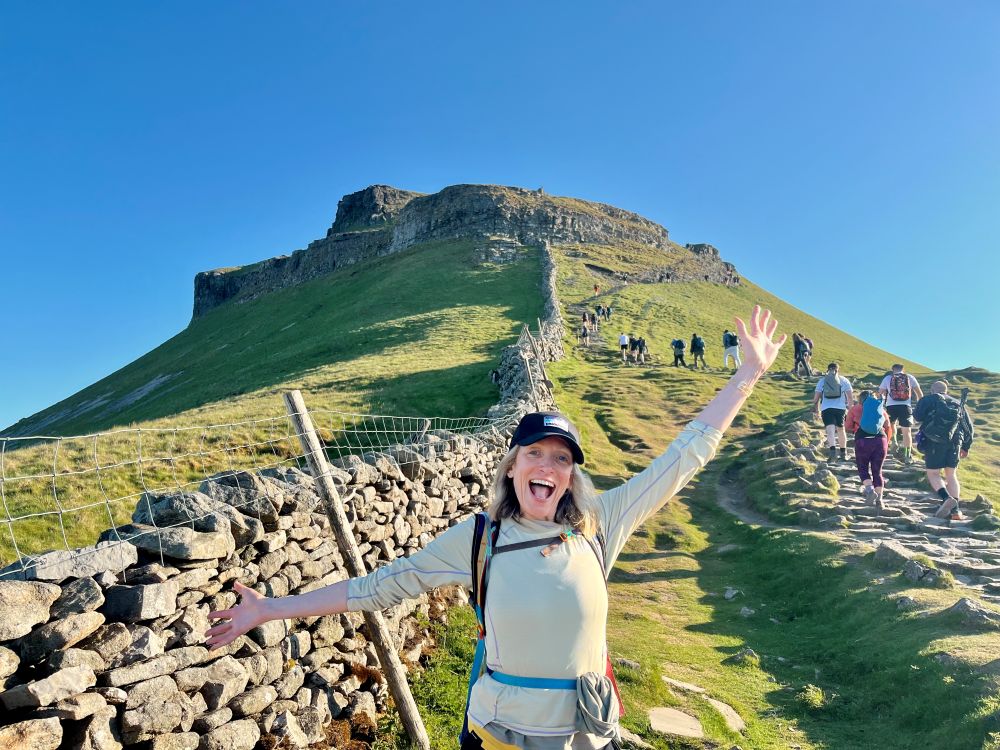
But despite the volume of hikers on the trail and the popularity of the route: this is still a mountain walk! Check the weather forecast, let people know your plans and keep them updated, and be careful as you go. The fact that the path is well-trodden and well-maintained means that people can become complacent. During our walk, on a fine day with no wind and very dry conditions underfoot, we saw two people having to be taken off the hills by Fell Rescue.
Take it seriously. Prepare for the effort involved. Do some training involving lots of time on feet. And take all the normal precautions you would take for a day in the mountains.
Know before you go
Here’s some practical bits and bobs to help you plan your own Yorkshire Three Peaks challenge. Firstly, get a map (we love maps, and they don’t need re-charging) but also download the Yorkshire Three Peaks app from the Yorkshire Dales National Park. It’s got detailed information for those who want to do the full walk or would like to walk the individual peaks, and it has important code of conduct and safety advice.
Speaking of which… Please read the Code of Conduct whether you download the app or not. The volume of people taking to this trail means that both the land and the local community are under ever-increasing pressure, especially on busy weekends. The FAQs section on the Yorkshire Dales National Park website also has useful safety advice, accommodation information and more practical tips for planning your event.
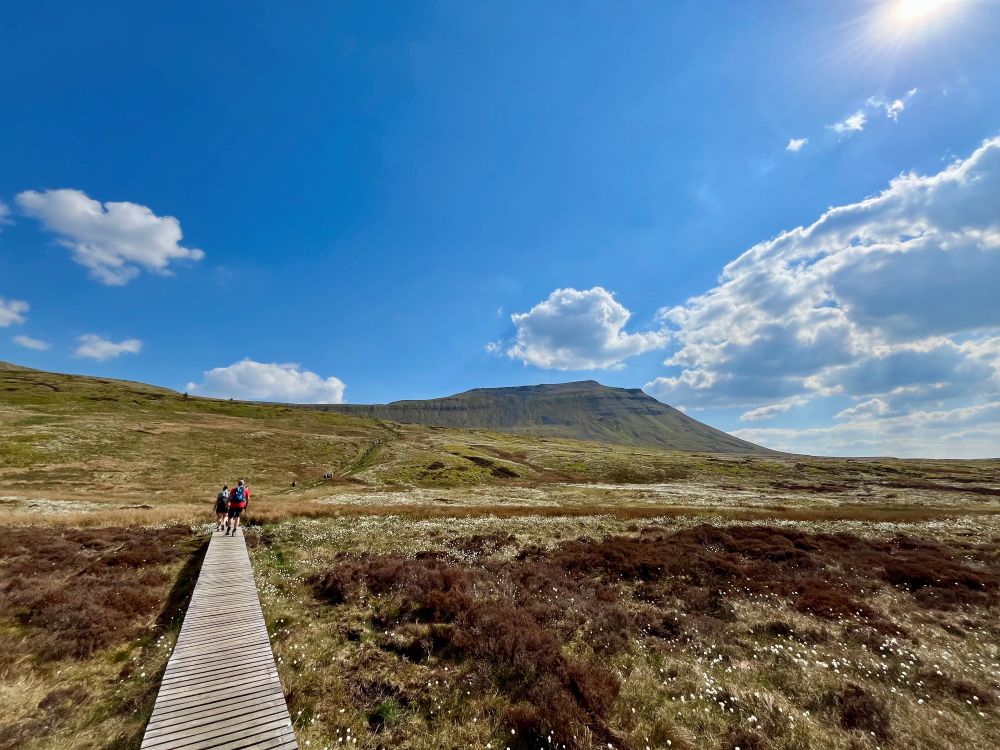
Because we have family and friends living (reasonably) nearby, we did not need to use any accommodation for the Yorkshire Three Peaks. There are options, from AirBnBs to bunkhouses and campsites in a number of places handy for the route. One again, the Yorkshire Dales National Park website has a handy accommodation guide to help you plan your trip.
We went by car, and would urge anyone doing the challenge in the same way to minimise the number of vehicles you need as a group and only park in places where you are allowed to. Paying for parking in Horton-in-Ribbeside supports the National Park to look after this wonderful corner of the world and the trails we followed. Both Horton-in-Ribbleside and Ribblehead have stations on the legendary Settle to Carlisle Railway, meaning the Yorkshire Three Peaks is more than possible as a car-free challenge.
Bring plenty of water and things to eat as there are no shops along the route, but do try and support the local pubs and cafes if you can. The cafe attached to the farm at the bottom of the descent from Whernside, before you climb Ingleborough, had toilets and free water available. They’ll only keep doing that for hikers if we also buy a cup of coffee and a chocolate bar, so give them some business.
Staying safe
Please read the safety advice and take the normal precautions. Let people know your plans and let them know if plans change. Remember it is nearly 39 kilometres and 1600 metres of ascent. Wear the right clothes and bring the right equipment. The Yorkshire Three Peaks website recommends the following kit list:
- A comfortable rucksack (with dry bags to keep kit dry)
- Walking boots (make sure you’ve worn them in)
- Suitable walking clothes (hiking trousers, walking socks, thermal layers)
- Waterproof trousers & jacket
- Hat & gloves
- Spare warm clothes
- Food
- Water
- Map and Compass.
- Whistle
- First aid kit (inc blister plasters)/ any personal medication
- Sunscreen/ sunhat
- Torch and spare batteries
- Fully charged mobile phone
- Emergency shelter/bivi bag
- Walking poles (if you use them)
In an emergency, call 999 and ask for the Police. Then tell the Police you need Fell Rescue.
Disclaimer:
Outdoor activities, like much of what we do in life, carry risks. Weather can change, accidents can happen and even well-planned adventures can get into difficulty. The information we have provided here and elsewhere on The Winding Trail is based on our personal experience(s) and is intended for general guidance only. We strongly recommend you consult multiple sources, including official trail guides and local authorities. We cannot accept any responsibility for accidents, injuries, damage or loss that may result from following the advice or information contained within this guide.
Stay safe and know your limits.
Would we do it again?
Ah, the big question. Loads of people reach Horton-in-Ribbleside and say never again. Indeed, it is not only the number of people on the track that makes the Yorkshire Three Peaks feel more like taking on a marathon than a normal day in the hills. And we were certainly moving quite gingerly for a couple of days after, and found stairs something of a challenge!
But whether it was the weather, the thought of our friends in Nepal, our friends on the mountain and in the valley, the atmosphere of the day all along the trail, or simply a combination of all of the above… it was such a glorious experience that you can’t help but want to do it all over again.
But you have to think, is it possible that things would be as perfect the second time? Perhaps we need to head to Horton once more to find out…
Words and photographs by Paul Scraton
