
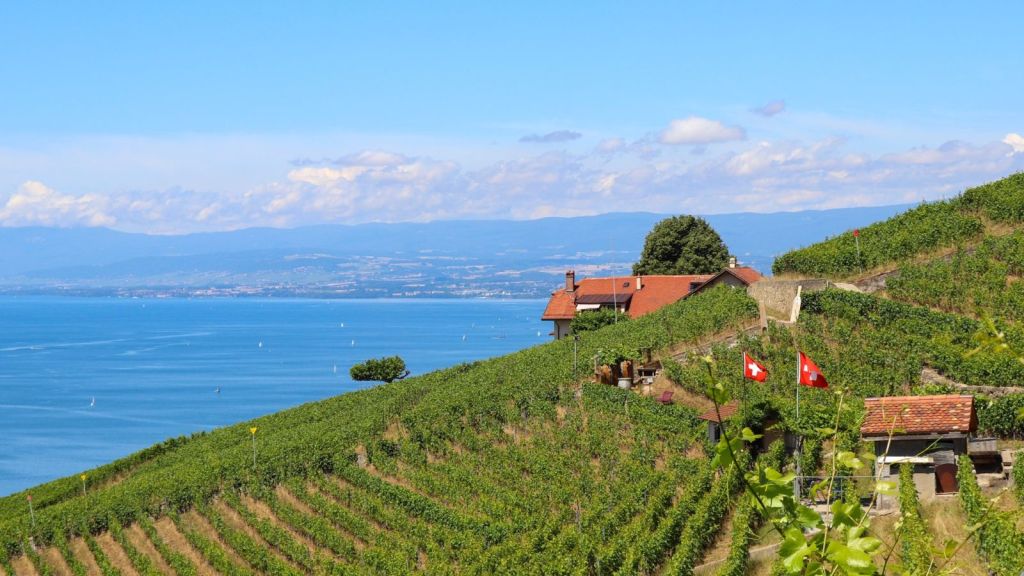
It is a simple plan and one that we have used before. Find a station or a bus stop a reasonable walking distance from where you are, take public transport there and then walk home. Sometimes the route will be obvious. Sometimes you will have to find your way and make choices as you go. Sometimes the walk will be disappointing, worth it only for the act of stretching the legs. But this is rarely the case. Everywhere has something interesting about it that can only be discovered if you go out and explore.
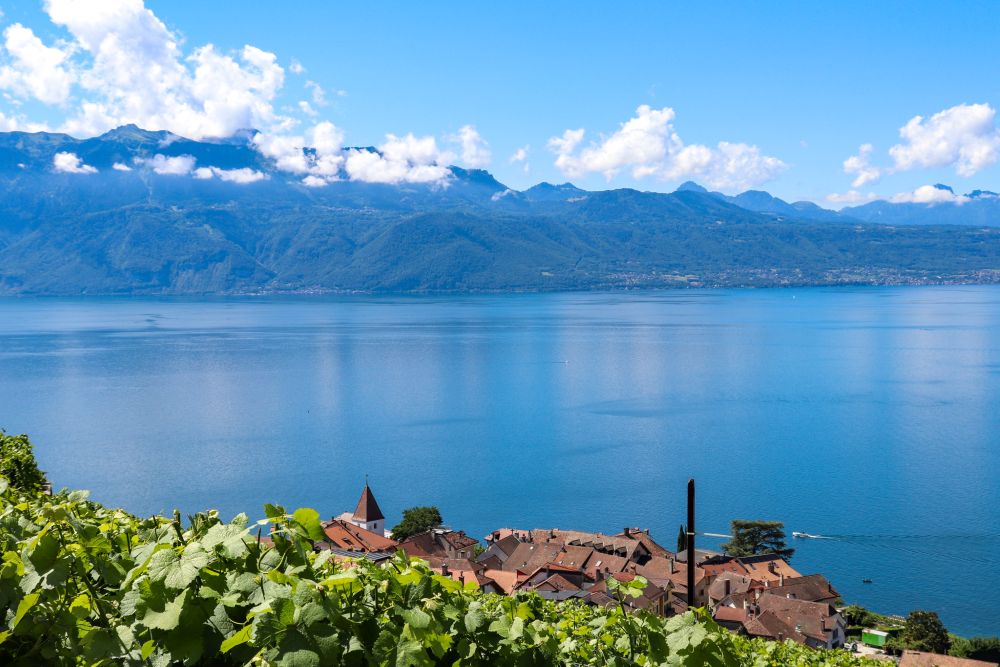
From Lausanne station we catch the train that is travelling east along the lake from Geneva towards Montreux. We climb off onto the platform at Grandvaux, high above the blue waters of the lake and separated from the shore by steep vineyard terraces. In the distance the mountains rise up, giants compared to the tiny white sails and elegant steamers crossing the lake below. The air is thick with the sound of the insects and the next train approaching the station, punctual to the minute.
***
It is said that they have been growing grapes here on the south-facing slopes of Lake Geneva since Roman times, but the terraces we are making our way through are slightly more recent. They were established sometime around the 11th century, when Benedictine and Cisterican monasteries controlled the area. A thousand years of wine that we can be sure of, while some accounts have pushed the earliest cultivation back into far distant history. In any case, there’s a long tradition of wine produced from these slopes and served in the inns and hostelries of the region.
Last night we took a walk through muggy streets in Lausanne ahead of a spectacular summer storm, and found a friendly restaurant tucked away on the street corner where they served hearty Rösti dishes with the local wines. The signature variety of this region is Chasselas, a white grape producing crisp, mineral wines. In that restaurant of heavy wood, where a stern waiter gave his true character away through his playful eyes, we got our first true taste of this place. It seems only right now that we are walking off the effects of the night before in the very landscape that has given us our fuzzy heads.
***
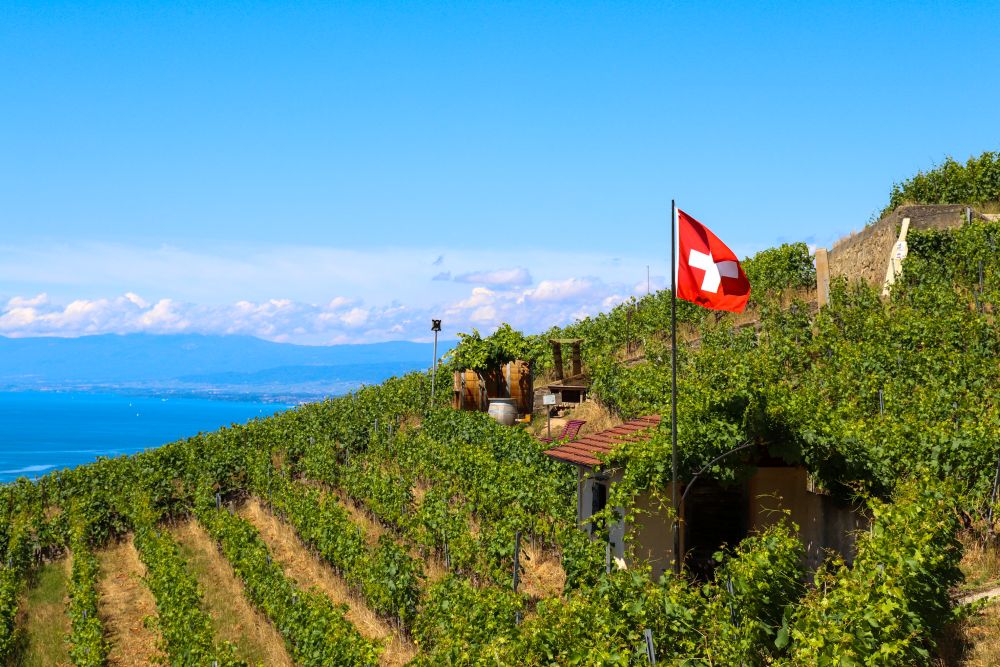
As we walk, small signs along the path signal when we have moved from one Domaine to the next, otherwise we would have absolutely no clue. Little huts, presumably built to offer shade and resting place for those working these steep terraces, fly their Swiss flags with pride and offer walkers like us the chance to take a breather and enjoy the view. The Lavaux vineyards run for roughly thirty kilometres along the north shore, from the eastern edge of Lausanne to Château de Chillon near Montreux. This is Switzerland’s largest contiguous vineyard and the poetry in the wine, we have been told, is in the fact that the grapes are grown in the land of three suns.
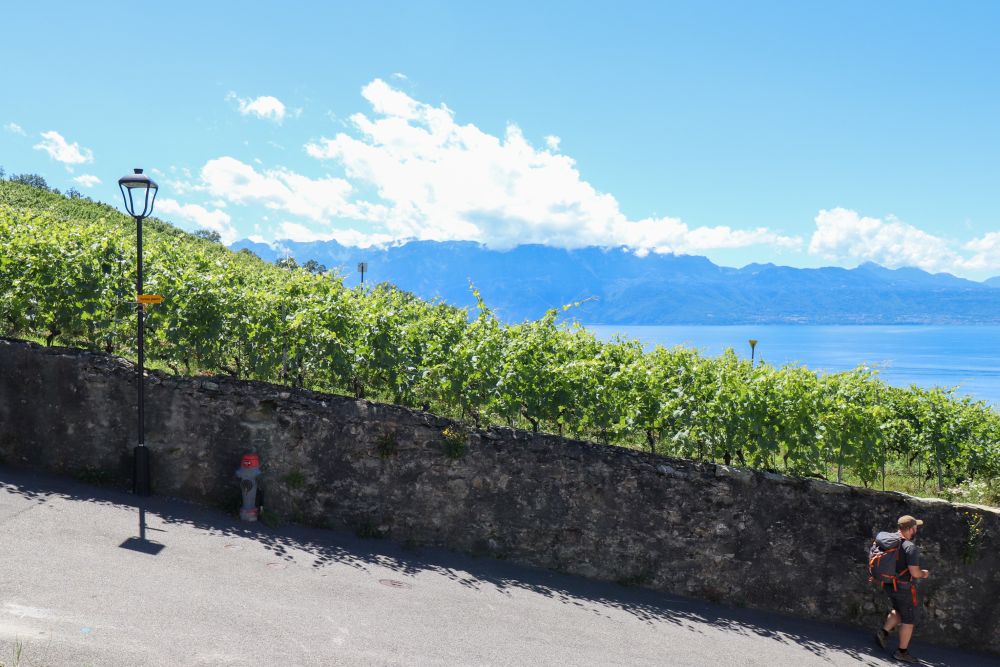
Sitting against an old stone wall in the midday heat, it is possible to understand where the idea came from. The first sun is high in the sky above our head. The second is reflecting in the waters of the lake below. And the third is radiating out around us, stored in the ancient rock upon which the vines grow. It’s in the location and the landscape then, in the terroir and how this all shapes the character of what is grown here.
But people have a hand in this too. It is said that the defining act of shaping the landscape we are moving through was monastic. Cistercian monks cleared the hillsides and built the mile upon mile of stone walls that formed the terraces upon which the vines grow to this day. Some terraces are so narrow they can only accommodate a single row of vines. The terraces are so steep that the harvest is an annual challenge, only partly mitigated with miniature cog railways and boxes swinging from overhead cables.
The things we do for a good glass of wine. We walk on, along narrow lanes between small villages and hamlets where you sense the importance of the health of these crops for those who live here. It feels like we could be walking in any one of the centuries between the monks getting to work and our visit, this thousand-year-old cultural landscape celebrated and protected by its UNESCO World Heritage listing.

The inscription reflects the challenges of this place, listed not only for its history and traditions, but the local efforts to maintain it:
“The Lavaux vineyard landscape is an outstanding example that displays centuries of interaction between people and their environment in a very specific and productive way, optimising the local resources to produce a highly valued wine that was a significant part of the local economy. Its vulnerability in the face of fast-growing urban settlements has prompted protection measures strongly supported by local communities.”
And yet, all the trappings of modern Switzerland are just a few steps away. At Lutry we pass beneath the railway tracks to reach the promenade and beach with its neighbouring marina and waterfront apartment blocks where electric BMWs charge behind high fences. The vineyards, where we were strolling only a few minutes ago, suddenly feel like a world away. The contrast is striking.
***
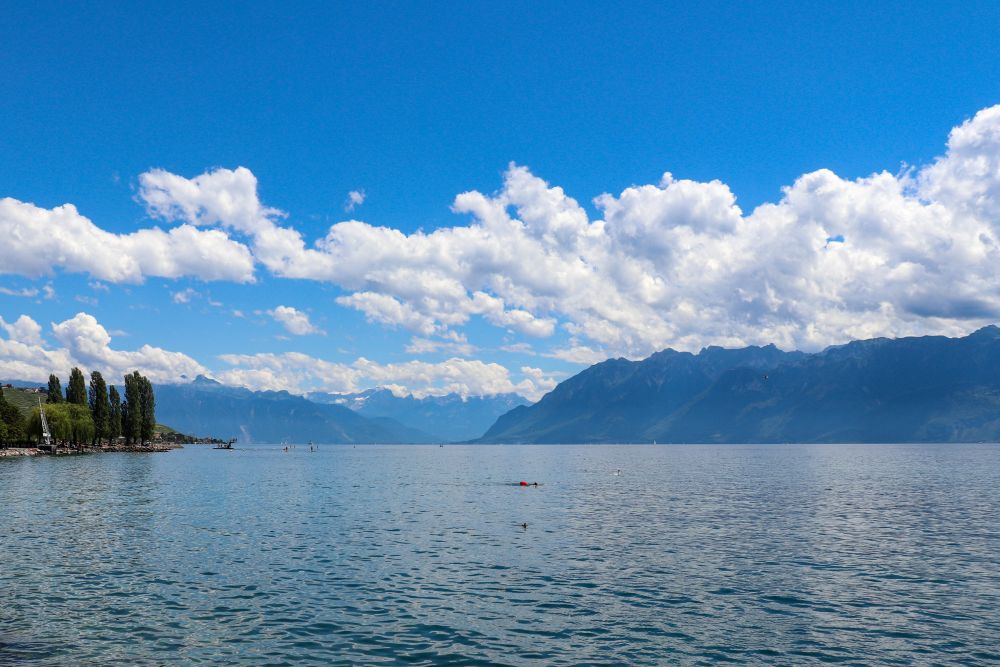
It is not enough to dispel the magic. As we follow the shore towards Lausanne, from Lutry to Pully, we pass more bathing beaches and more marinas. It is even hotter now in the land of the three suns, the air heavy. At a small promontory that marks the border between Pully and Lausanne, we stop on a small stony beach to strip down and cool off on the lake.
Swimming out from the shore, we can look back to where we’ve walked from. This is a place that has inspired people for centuries, and all tied up in the wine and the landscape it grows from. Lord Byron no doubt drank his fair share. Nabokov lived in Montreux for a while and would walk the hills in search of butterflies and ideas. Prince called Lavaux his happy place and wrote a song dedicated to it, escaping into the vineyards from the bright lights and attention of the festival down the shore.
We float out on the water. No poetry from us today. No songs with a light funk groove. Just the sensation of the three suns, the buzz of the insects, the feel of an old stone wall and the memories of a glass of wine on a table polished smooth by decades of customers. A little way down the lake a crane suggests a new building rising or the renovation of an old one. Lots can change on the waterfront, as years become decades become centuries. But just above, on the steepest of steep slopes, it seems that some things manage to stay the same.
Words by Paul Scraton
Photographs by Katrin Schönig
