
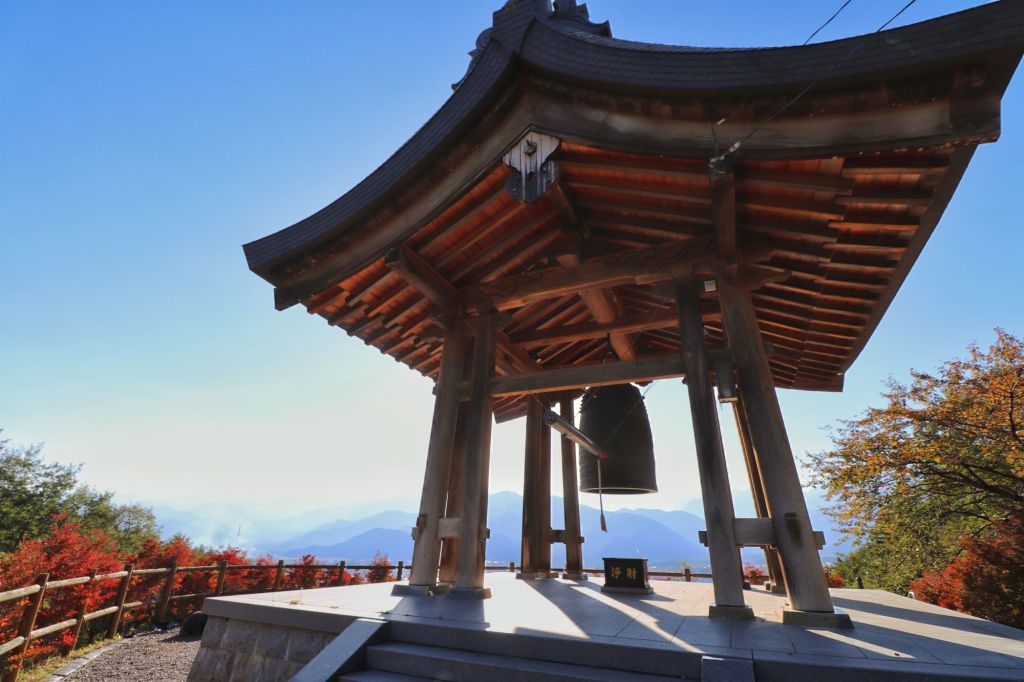
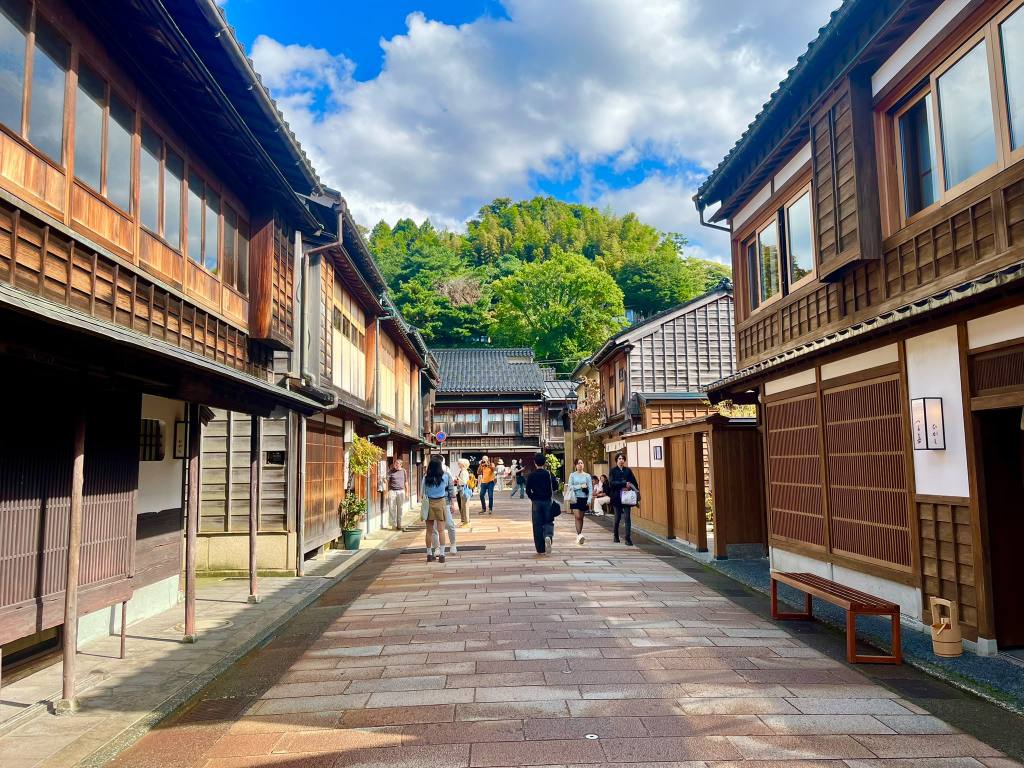
From a lookout point halfway up Utatsuyama Hill, we can see across the dark grey gable rooftops of the teahouse district, a collection of narrow streets and two-storey buildings with slatted wooden fronts where the geisha entertained nobility and wealthy merchants. Today there are daily geisha shows aimed at visitors and a collection of craft stores and upmarket coffee shops. We have left the crowded streets of Higashi Chaya behind to follow a path up through thick forest to a small shrine tucked away between the trees. All we can hear is birdsong and the buzz of insects. Beyond the rooftops of the teahouse district we can see apartment blocks and glass skyscrapers, telecom towers and mobile phone masts. We chose Kanazawa to start our journey for no other reason than we hadn’t been here before, but from the moment we arrived there has been something familiar about it. It is good to be back in Japan.
*
Higashi Chaya was once the entertainment district back in a time of samurai, and Kanazawa’s fortune to have avoided major wartime bombing or devastating natural disaster means that there is a higher proportion of Edo-era architecture than in other comparably sized Japanese cities, from the teahouses to the samurai residences alongside a pretty stream in Nagamachi.
It is a short walk from our hotel in the bustling Katamachi neighbourhood to Nagamachi at dusk, as long shadows fall across the courtyards and gardens, the gloaming filled with autumnal insect chorus, most notably the bell, pine and field crickets that manage to drown out the gentle hub of the electric vehicles cruising the Kanazawa backstreets on this Wednesday evening.
*
Our journey will take us from Kanazawa across the country to Sendai and then north through Tohoku, at least partly inspired by the journey of Matsuo Bashō in 1689 that would be his major work of haibun poetry, published after his death as Oku no Hosomichi or The Narrow Road to The Deep North. Each night during our time in Kanazawa we stop at the Family Mart convenience store close to our hotel in Katamachi, to pick up some beer and snacks for the hotel room. It is only on the last night that we notice a small monument between the entrance and the street. Our translation app tells us that it was on this spot that a merchant Miyatake-ya Iemon had his house back in the 17th century, and that it was here that Bashō spent eight of his nine nights in the city.
*
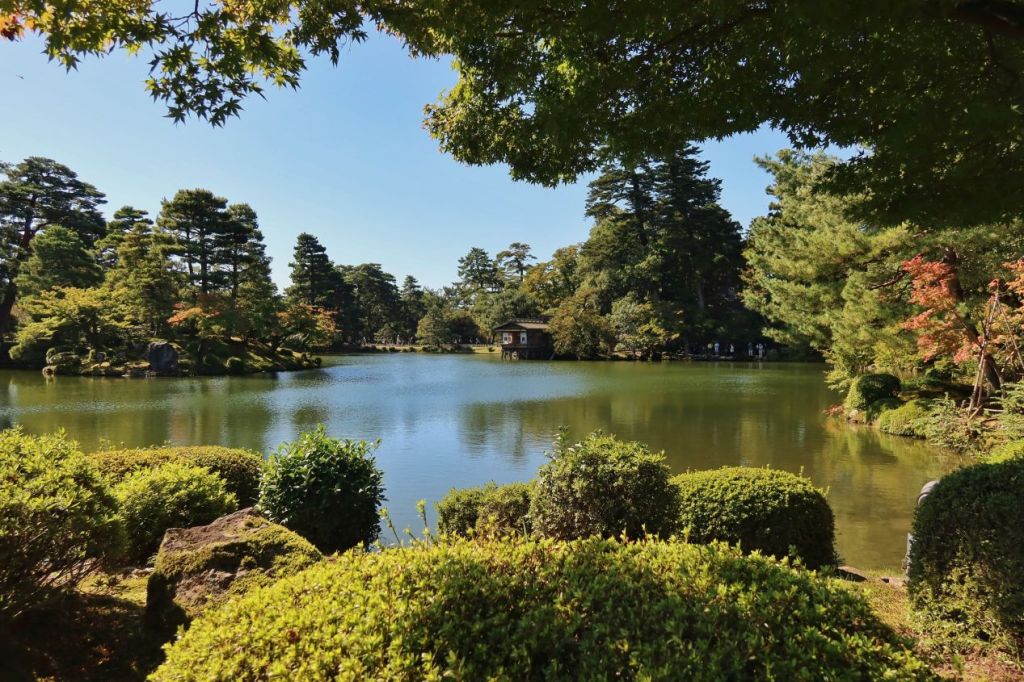
We meet Bashō again in the Kenroku-en garden, which was developed to its current form after the poet passed through town, but a place that you can’t help think that he would have appreciated. The name of the garden comes from the six key elements that any outstanding garden must have. Spaciousness. Artifice, or the involvement of human skills. Watercourses. Seclusion. Antiquity, and the ability to feel nature from ancient times. Panoramas. Today the garden is busy with a mix of tourists and school groups, who queue up patiently in their uniforms for a class photograph in front of the Kasumiga-ike pond and its Kotoji lantern. This is the iconic view of what has been declared one of Japan’s ‘Three Great Gardens’ and so everyone must have their picture. But you only have to stroll a little to find a quiet corner.
It’s still warm in October, but here on the hill there is a breeze that blows in off the Sea of Japan. In Kanazawa, Bashō wrote:
Red, red is the sun,
Heartlessly indifferent to time,
The wind knows, however,
The promise of early chill.
Autumn is coming.
*
In Japan there has been much debate about travellers, especially those coming from overseas. The volume of tourists to the islands, most notably from China and accelerated by the relative weakness of the yen, has prompted much soul-searching. Especially as the factors that have encouraged the explosion of tourist visitors to Japan has made it more expensive, and therefore more difficult, for Japanese to travel overseas themselves.
“We need tourists,” Osugi says, as he serves us a drink in his tiny upstairs bar, with seating for eight at the counter and another six around two small tables just inside the entrance. “And we Japanese need to travel. But only 18% have a passport. The others… yes, the weak yen is a problem for sure. But even if it was stronger, many Japanese think that everything beyond Japan is dangerous. So they would prefer to stay here.”
The name of Osugi’s bar means ‘door’ and he sees it as the door to Kanazawa for half of his guests, who are foreigners, and the door to the world for the other half who are Japanese.
“But most of the Japanese who come here have lived abroad. Or at least travelled. So they are different, like me. It is hard to reach the others.”
*
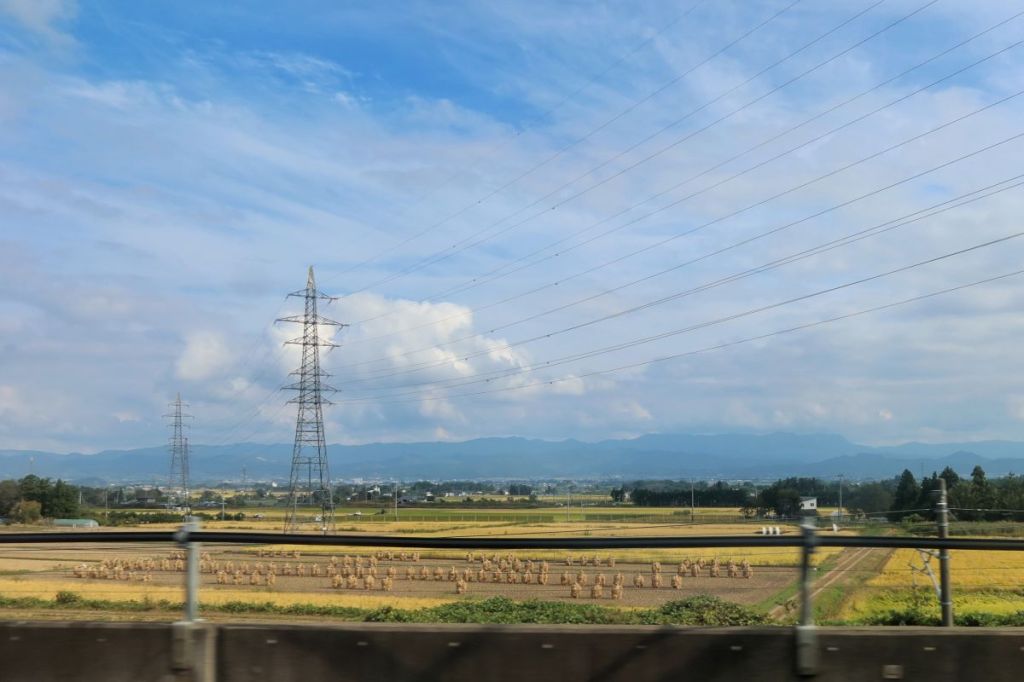
No matter how many times you take the Shinkansen you cannot fail to be impressed. The comfort! The speed! The punctuality! Outside the window, the landscapes of Japan, from the mountains and the forests to the cities and the suburbs (and the suburbs and the suburbs) unfolds like a clip from a movie. Detached houses and apartment blocks. Rice fields and scrapyards. Overpasses and underpasses, railway lines and signs and billboards, cartoon characters and mascots. The train races towards the mountains and then plunges into them, the darkness of the tunnel filling the carriage windows until we emerge breathlessly into the sunlight again before, a moment or two later, it is dark once more.
*
Before we left Kanazawa for Nagano, we took in a small exhibition at the 21 Museum of Contemporary Art by Hitoshi Ushijima and Hiraki Sawa, whose pieces engaged with the aftermath of the 2024 Noto peninsula earthquake. Ushijima’s work was a reclamation of a piece of art created on the peninsula that had been damaged in the earthquake, recovered and presented alongside documentation from the time of the disaster. Sawa’s films showed footage of the landscapes of his family’s life in the Noto region combined with traditional stories, drawing on life and memory in a place shaped by the sea and the mountains, and the sense of time that develops in a landscape such as this.
Even when we are far away, a familiar landscape can suddenly come to mind. What returns to us is not merely a scene, but the life once lived there, the time spent there, and the memories inscribed in the land itself.
*
The bus drops us in an edgeland space of sauna showrooms, a BMW dealership, boxy drugstores and drive-to restaurants, and the speed skating rink that was built for the 1998 Nagano Winter Olympics and is home to the memorial museum for those games. We compare notes about watching these games. One of us in the United States. The other in Leeds.
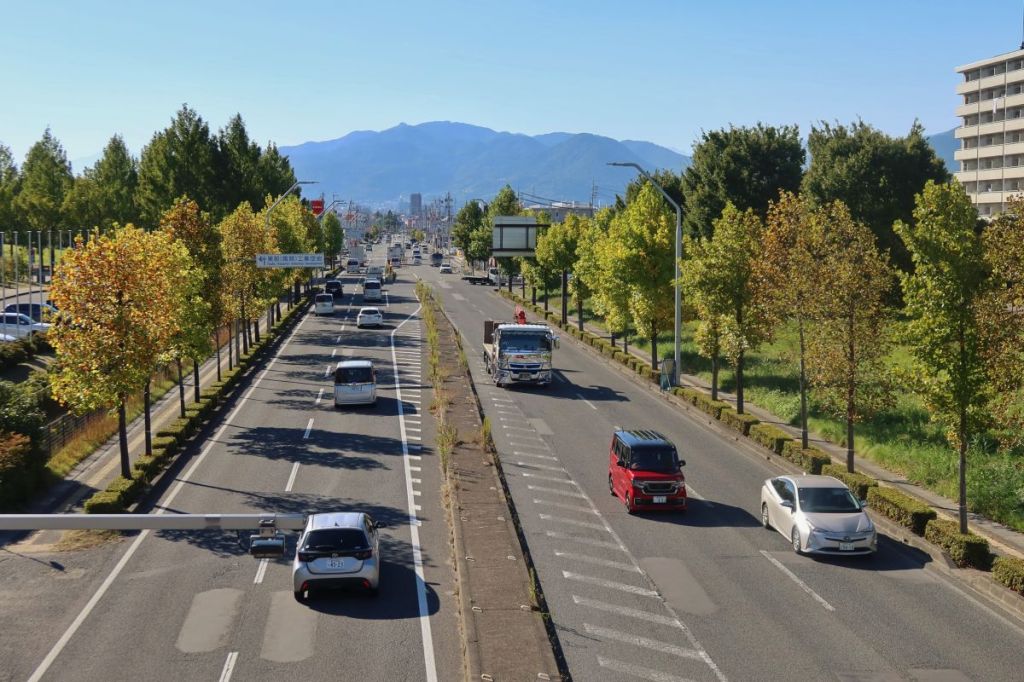
Although Nagano, at first glance, feels like another Japanese city, the fact that you can see hills rising out of the end of every concrete canyon and that, when the light is right, you can see the high mountains in the distance, gives it a certain something. You notice the hikers and mountaineers at the train station. The advertising posters for getting out into the hills. And of course, the fact that they held a Winter Olympics here.
*
We follow the Olympic Road to Hakuba, where they held much of the Alpine skiing events in 1998, and catch a gondola and two chair lifts for the hike up to Happo-ike, a famous beauty spot at a little over 2,000 metres, where the peaks of the Hakuba Sansan mountains are reflected in its waters. This being day one of a three-day holiday in Japan, the trails are pretty busy on the hike up there, but we are all glorying in the scenery, the autumn colours and the beautiful weather, so the mood is good.
*
In Ōmachi we get our tickets for the Yusamuri Yashiki Yakushi no Yu, a public hot springs baths and also an education hub dedicated to Ōmachi Onsen Village’s hot spring culture. The local nickname for what bubbles up here is the ‘water of recovery’, said to relieve rheumatism, joint pain and aching legs from a day walking the mountains. So we strip off, shower and wash, and then join our fellow bathers in the outside bath. Above the water is a canopy of a Shishigashira(Lion’s Head) Japanese Maple, its greens beginning to turn. Through the trees and bushes we can see the later afternoon sun hitting the highest of the peaks above the town. There is a low conversation going on in Japanese at one end of the bath, but otherwise everyone is quiet.
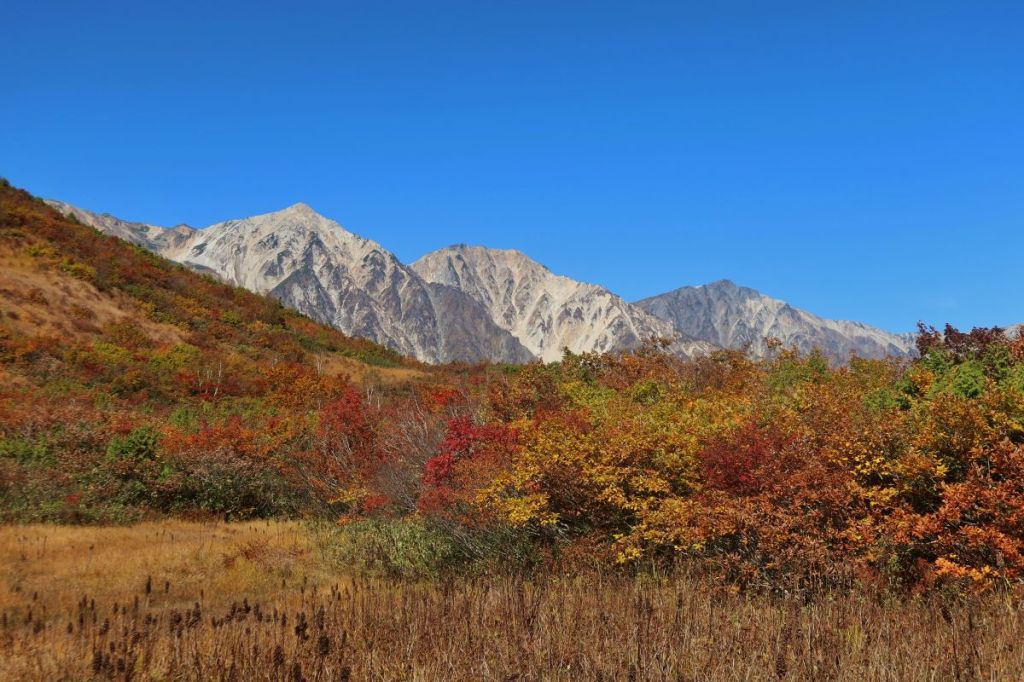
If spring is the time of beginnings, autumn is the time of endings, marked by the change in the leaves, from green to golden and red. When Yasunari Kawabata won the Nobel Prize for Literature, he used his speech to discuss the concept of ‘Mono no aware’, the wistful appreciation of beauty and the knowledge that it cannot last. Perhaps this is natural in a society that has always lived with earthquakes, floods and other natural disasters. But an appreciation of a moment in time, even in the knowledge that it will not last forever, is something useful for all of us.
*
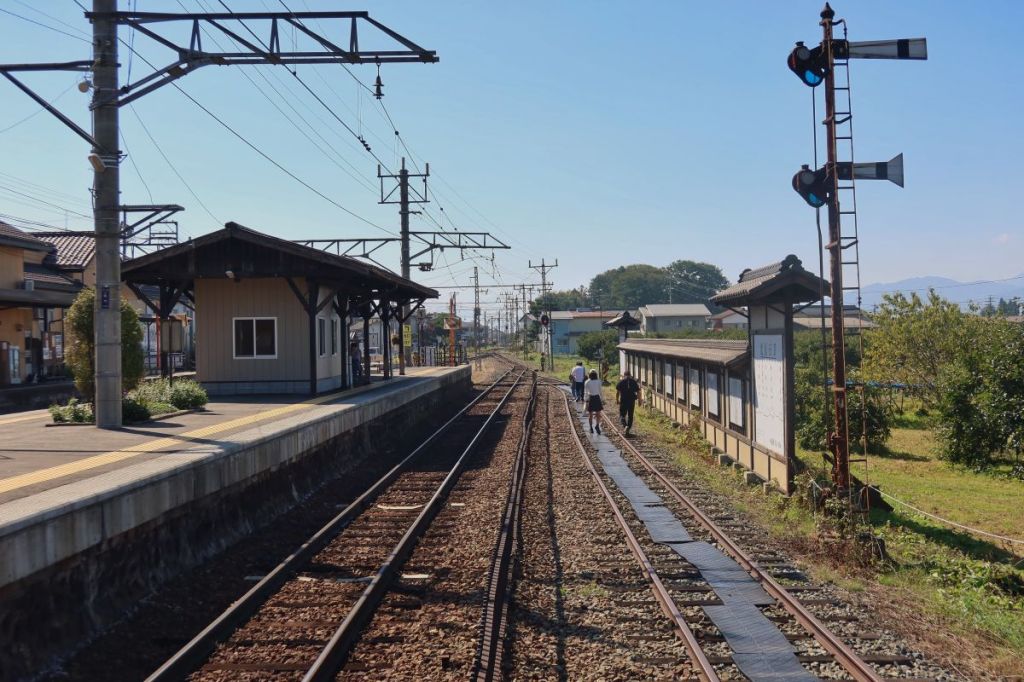
Such as chestnuts. In Obuse, on day two of the three-day holiday, the buses, cars and trains on the Nagaden line have delivered hundreds of visitors on the small town famous for its apples, grapes and, yes chestnuts, and now most of them are queueing at small stalls where they cannot roast them quick enough for how fast they can sell them.
*
We escape from the crowds at the Zenkoji Temple back in Nagano and into the cool reception room of the Nishinomon Yoshinoya Sake Brewery. It was established in 1637 on grounds owned by the temple, and we have the chance to try seven of the sakes they make as well as explore some of the history of the place. Back in the Edo era wealth was measured in rice. So it was important that the value of rice was maintained. When the harvest was good, more sake was brewed to keep the price of rice high. When the harvest was bad, sake was restricted or even banned, to make sure people had enough to eat.
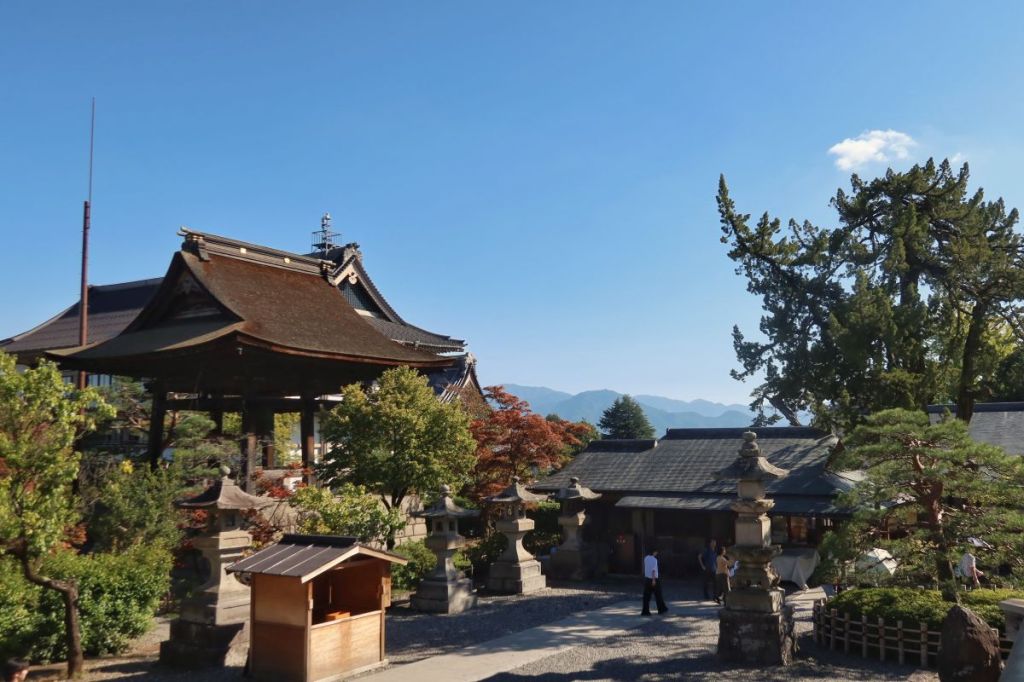
Today, there is more than enough for everyone in the line of shops on the approach to the Zenkoji gates. The temple dates back to the seventh century, and is one the last remaining pilgrimage sites in Japan. The story goes that the temple contains a hidden Buddha statue, the first that was ever brought to the country. But as no-one, including the chief priest, is allowed to see it, nobody can be properly sure that it really exists.
Kobayashi Issa, one of the ‘Great Four’ haiku poets along with Buson, Shiki and our friend Bashō, was a son of Nagano and, as well as contemplating the ‘Mono no aware’ of the season, was perhaps wondering whether it was all a practical joke when he wrote, channeling his own spiritual loneliness when the leaves start to turn:
Autumn wind –
the Buddha of Zenkoji Temple
Is gone
*
At Nagano station we find a quiet corner in the cafe and wait out the time between check-out and the train. Before we left the hotel we went for a run down by the Saigawa river, passing by a pitch and putt course as well as numerous baseball diamonds. On day three of the three-day holiday, it seemed like all the junior teams in Nagano were suited up for the ballgame, while their parents stood together behind home-plate to chat and enjoy the fact that none of them had to go to work today. As we wait at the station, we see travellers come and go through the platform gates, spy hikers on their way to the Hakuba bus and sports teams meeting in front of the information sign before catching the train to an away game. In this place we are all channelling our inner Bashō, when he wrote: From this day forth, I shall be called a wanderer, leaving on our journey…
From Nagano, our eyes turn east, to Sendai and the pine islands of Matsushima.
Thanks for reading,
Paul & Katrin,
Sendai, October 2026
Over the next few months we are travelling through Japan and New Zealand, and will be sending out these newsletters from the road to everyone subscribed to The Winding Trail. We hope you enjoy these sketches from our travels.
