
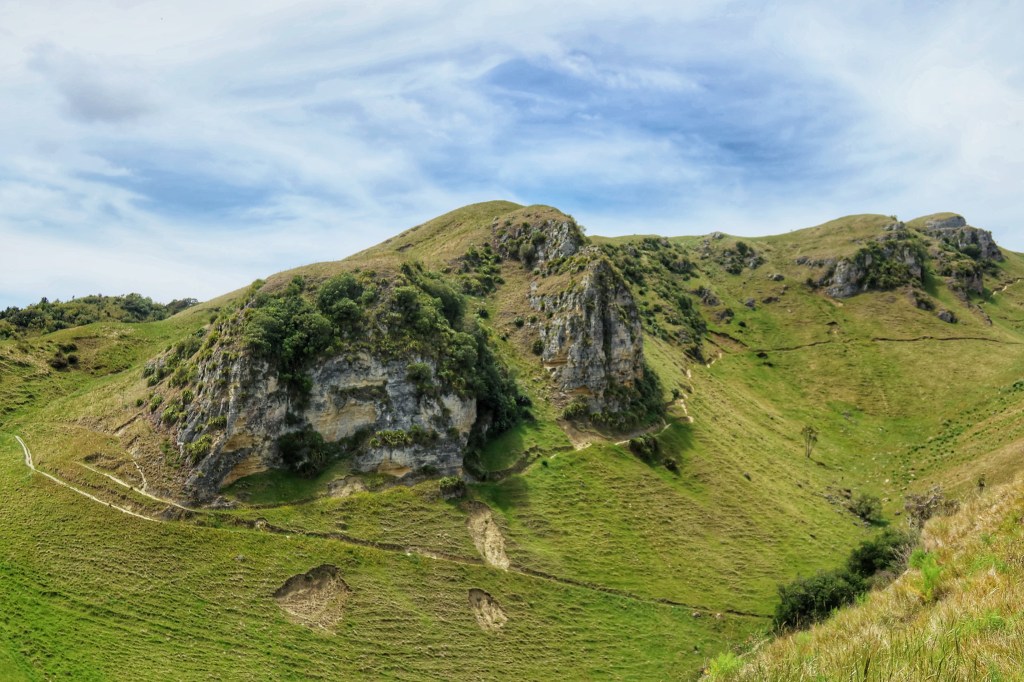
At Mercer village, sandwiched between the Waikato river and State Highway 1, we stop for bacon sandwiches. The cafe is busy mid-morning with a mix of travellers like us, locals who greet the woman behind the counter by name, and a group of vintage car enthusiasts who keep an eye on their highly polished vehicles through the window as they sip their flat whites and long blacks. We’ve been in New Zealand for a couple of hours by now, and the brain is beginning to adjust to being able to follow every conversation that is happening around us.
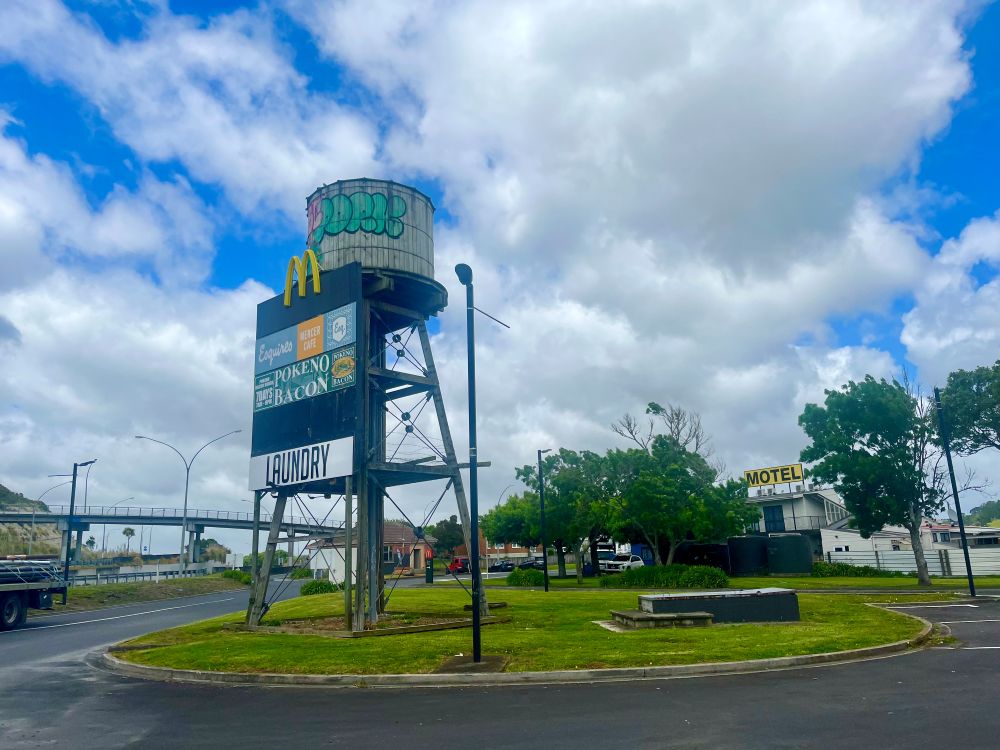
Outside it is springtime. The trees are showing a brilliant green. We’ve seen lambs in the fields. One overnight flight and we’ve been transported across seasons. Alongside the lack of sleep and the fact that everything around us seems both familiar and different all at the same time, it all feels a little uncanny. Less than an hour later we pull into a lay-by at the Te Iringa Lagoon Scientific Reserve, having just driven by a collection of statues by the side of the road.
This cluster of pou, named Te Kaahui Hakuturi, watches over all travellers from north and south. Te Kaahui Hakuturi acknowledges the hakaturi (creatures of the natural environment) who, along with patupaiarehe (fairy folk) have crossed the Taupiri Range on well-worn pathways since the beginning of time.
In the car park we nap before the final stretch into Hamilton, a dozing dream soundtracked by birdsong and the passing trucks. If the fairy folk are there too, we do not hear them.
*
A cabin in the holiday park on the edge of town. It’s still a little chilly for tents, although a couple of brave souls will arrive in the gloaming to pitch up by the fence to the retirement village. From the small deck we spy Masked Lapwings, Tui and Australian Magpies. Clearly nothing uncommon, but nice additions to the life list of a European on the other side of the world.
‘What’s that?’
Something is rustling in the bushes between the cabin and the car. We greet the sparrow like an old friend.
*
The road from Hamilton to Raglan winds its way through some pretty hilly farmland until you reach the sea, and it is a road that drew the first surfers of the region from the city to what became known as “the wave”. In 1966, Manu Bay featured in the film Endless Summer and became famous, and even on this springtime working day there are plenty of black-clad figures in the water, trying to catch the wave that the Encyclopedia of Surfing tells us is:
…capable of producing rides of nearly surreal length.
*
Raglan itself is a friendly, hippy-ish surf town with black beaches, a big old holiday park and some stories of confiscated land, broken promises and land rights protests that were some of the most significant of the 1970s.
Activist Tuaiwa (Eva) Rickard, speaking in the 1980s:
The government took our land with promises of buildings, of meeting houses and compensation. They did not adhere to their promises and their offer was to return the land to my people (…) So I will not accept it and it is the first time I believe that Māori’s have taken the stand and I’m thankful for the support of the Arawa people, the Ngāpuhi people, this is now a tribal issue that has become a Māori issue.
*
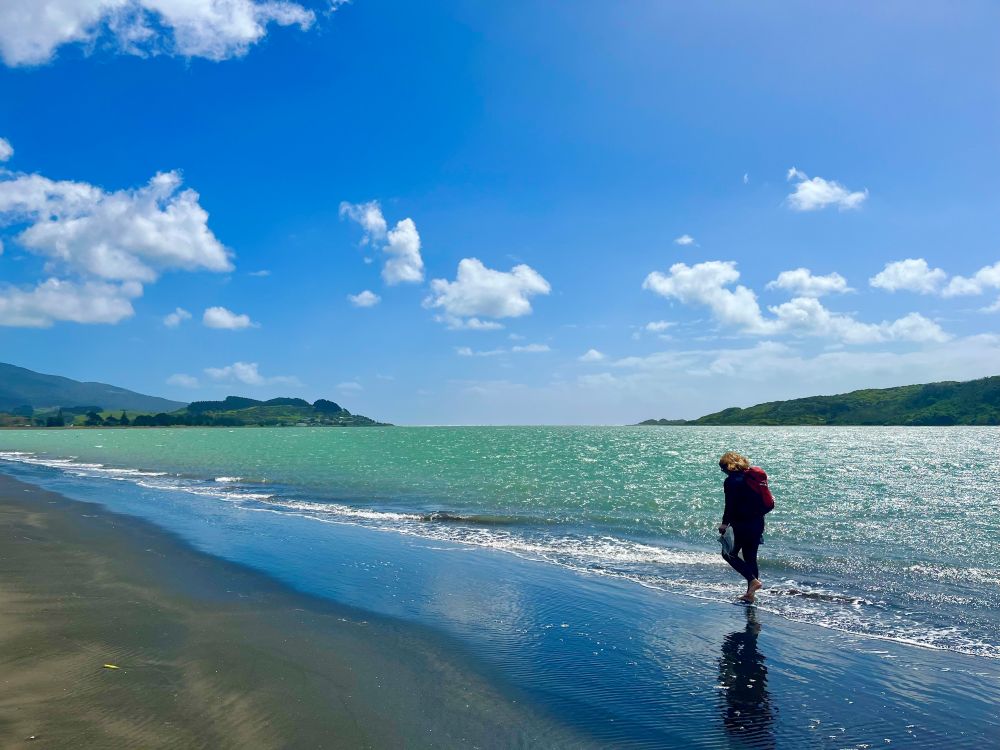
We run along the Kaitoke Walkway and then stroll Te Kopua beach, just a pebble throw from the golf course and airfield that was at the heart of the land rights protests, and still in the process of being resolved once and for all. There are other traces of history here too, such as a half-buried World War II pillbox that cannot help but remind us of similar installations on the Baltic shore of Germany.
As we drive through the town at dusk, it seems like all the children (and quite a few enthusiastic parents) have dressed up for the occasion. It is only now that we remember that, despite the blossom and the birdsong, this is of course Halloween.
*
When does an imaginary place, and invented place, become real? On the bus from the visitors centre we drive through a tiny portion of an enormous farm, while most of the bus are looking past the sheep-trodden terraces of the volcanic hills in search of something that is very real to them indeed. Welcome to Hobbiton, born out of the imagination of Tolkien and Peter Jackson, a vision of The Shire that lives on as a pilgrimage site for fans of the books and movies for far longer than it was ever a film set.
You get the feeling that most groups of travellers here are made up of true fans and their companions who are more than happy to share in their enthusiasm for the place. And it is remarkable in its construction and the feat of imagination that saw these sheep fields and knew that this would be the place to bring the words on the page to life. More than anything, it is a testament to how creativity and art, literature and film can move people, help them find meaning and understand the world. For some of us it was a fun and entertaining distraction, and perhaps an essential part of the New Zealand experience. But for some of us, it was extremely important indeed.
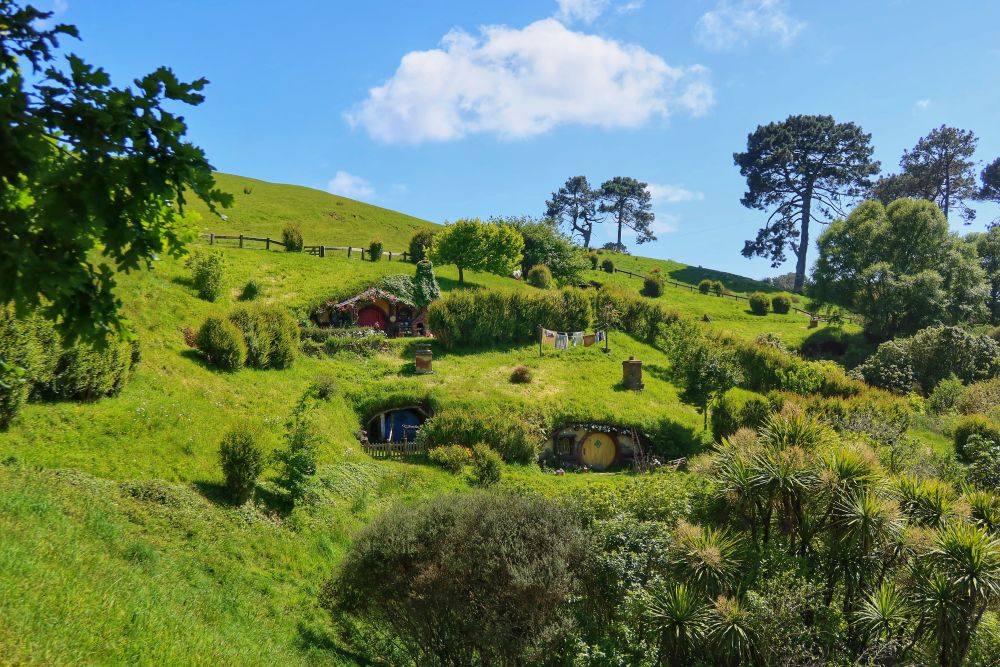
We send some pictures to Janet in Liverpool, who bought me my copy of Lord of the Rings more years ago than I can remember.
A life-long pleasure… she replies, and there are many, many people wandering the pathways of The Shire that would surely agree with her.
*
Since we’ve been in the country it feels like we’ve had the mighty Waikato river as our companion, from Mercer by the side of the highway to Hamilton and now in Taupo, where it flows out of the lake and down a narrowing gorge until it races through the Huka Falls. This is one of New Zealand’s most visited spots, but the path along the river bank is pretty quiet this morning as the sound of the falls grows ever louder until we are upon it, and left to marvel, and perhaps fear a little, the power of the water as it rushes through and over.
*
Above the falls are the Wairakei Terraces, with hot springs and a geothermal walkway through a place where Māori have long recognised the healing powers of the waters. This was declared a “no war” zone, where warriors of different tribes were permitted to bathe in the hot pools.
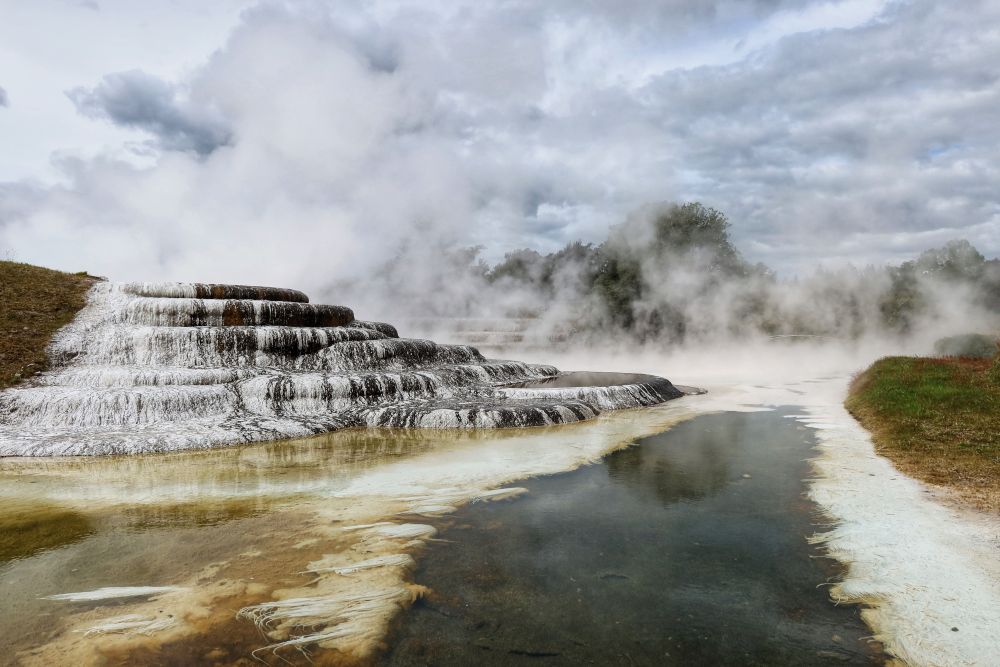
Ngātoroirangi, a high priest who came to Aotearoa on the Arawa canoe and was one of the first to explore and claim the lands of central North Island:
I arrive where unknown earth is under my feet. I arrive where a new sky is above me. I arrive at this land, a resting place for me. O spirit of the earth! The stranger humbly offers his heart as food for you…
*
The volcanos and hot springs of Taupo are a reminder that these islands were shaped by the collisions of tectonic plates. In Napier, its distinct Art Deco stylings that make it wonderfully appealing from the first moment are the result of a massive and catastrophic earthquake in February 1931 that destroyed much of the city and created new land where there was only water before.
*
As we travel through the vineyards of Hawke’s Bay, our guide Sug, reflecting on the earthquake, the pandemic and the impact of Cyclone Gabrielle in 2023, says:
‘All bad things happen in February.’
In the settlement of Meanee, flood waters during the cyclone rose to seven metres in places, ripping apart the vineyards and destroying houses and farms. At Shed Five Thirty, there is only a grassy field where the vines once grew.
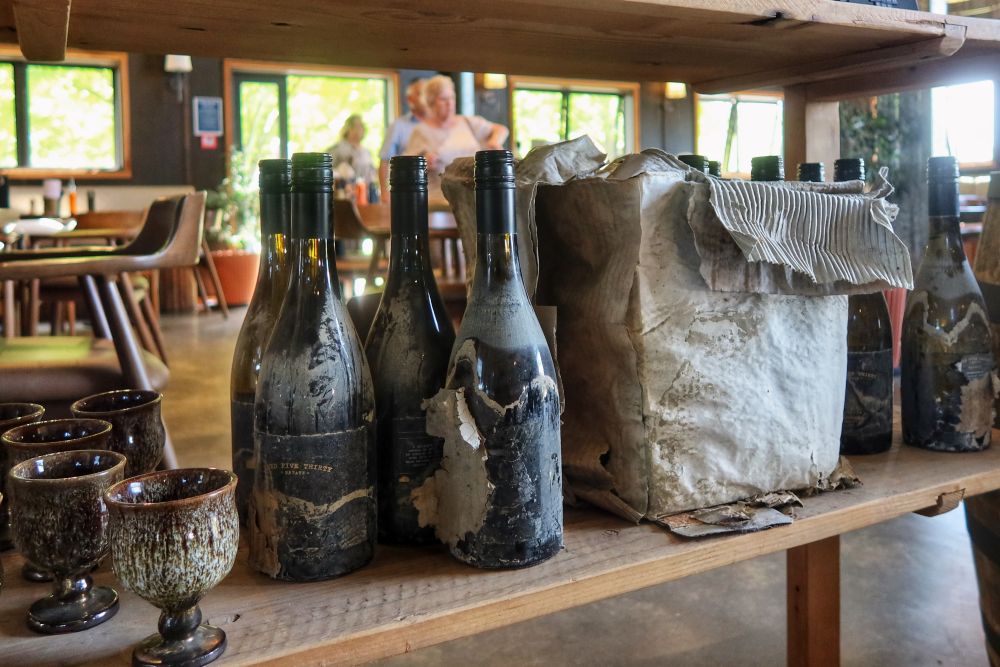
‘Our neighbour, he was up on the roof. Had to wait out the floods up there. But luckily the house held together’.
Some parts of Hawke’s Bay were declared red zones, with properties built there impossible to insure. Elsewhere across the bay, there is concern about the long-term prospects for the wine industry.
‘The young don’t drink like we do. Not any more. It is going to be interesting to see what the next sixteen months will bring.’
*
The runners at the Legend of the Peaks trail event in the Wakarewarewa Forest above Rotorua are drinking beer, not wine, at the end of our race along the tracks and up the hills. Those of us running the shorter events enjoy the local craft brew during a gap in the rain, as we wait for the ultra runners to complete their fifty-kilometre struggle through the trees. The rain and the mud have done little to dampen spirits. If anything, it has produced a strong sense of camaraderie between all of us foolish enough to make this our Saturday morning plan.
‘The most important rule is to be a good bugger,’ the organiser says at the briefing beforehand. ‘Look after each other. And have fun.’
Meanwhile, as we run, the election is fully under way. In our motel room that evening we watch the results trickle in. Too close to call. We learn about overhang seats and special votes, and the fact that we might have even left New Zealand before the final, final results are declared. After a morning of feeling the collective support of people from all different backgrounds and personal stories, it is a stark reminder of the general mood in many places: a society split, divided and ultimately unsure of how to get out of the mess that is, it seems to be, the only thing all sides can agree on.
*
Below the hills we were running yesterday is Te Puia, home to the legendary Pōhutu geyser, the largest in the southern hemisphere. Te Puia is owned by the local iwi (tribe) and is part of the Te Whakarewarewa geothermal valley, a place that has been welcoming visitors since the end of the 19th century and is one of the birthplaces of tourism in Aotearoa New Zealand.
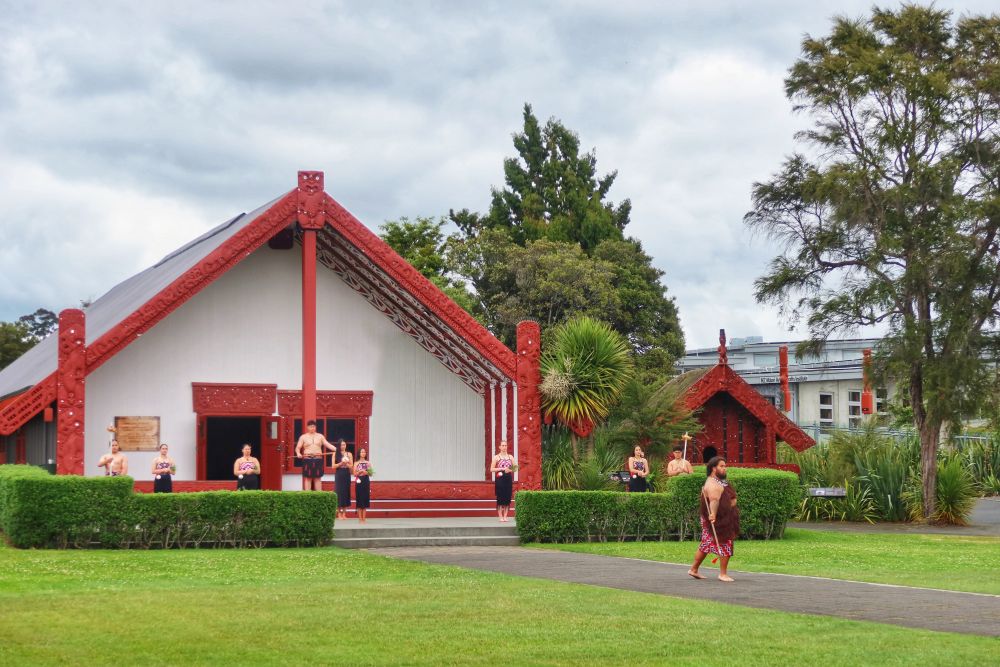
Our guide takes us through the different sites, from the geothermal pools and geysers to the trails through the native bush, the Kiwi conservation centre and the Māori Arts and Crafts Institute, founded in the 1960s as part of a movement to protect traditional stone- and bone-engraving, wood-carving and weaving techniques. It is all, our guide tells us, part of their commitment to honour their promises to the tūpuna (ancestors) to preserve Aotearoa’s unique flora, fauna, language and culture for future generations.
*
Identity is built in many different ways. As we slowly make our way north, back towards Auckland, we stop in Paeroa, famous for its mineral springs that once provided the water for Lemon & Paeroa or L&P, the soft drink “world famous in New Zealand” that moved its production from the town back in 1980 but still remains very present, not least thanks to the massive L&P Bottle that greets all visitors to the town.
Classic Kiwiana, my friend from New Zealand writes from Berlin, those quirky things that help create a sense of nationhood. Chocolate fish. Marmite. The pies. Speight’s Gold Medal Ale. We are trying to try them all.
*
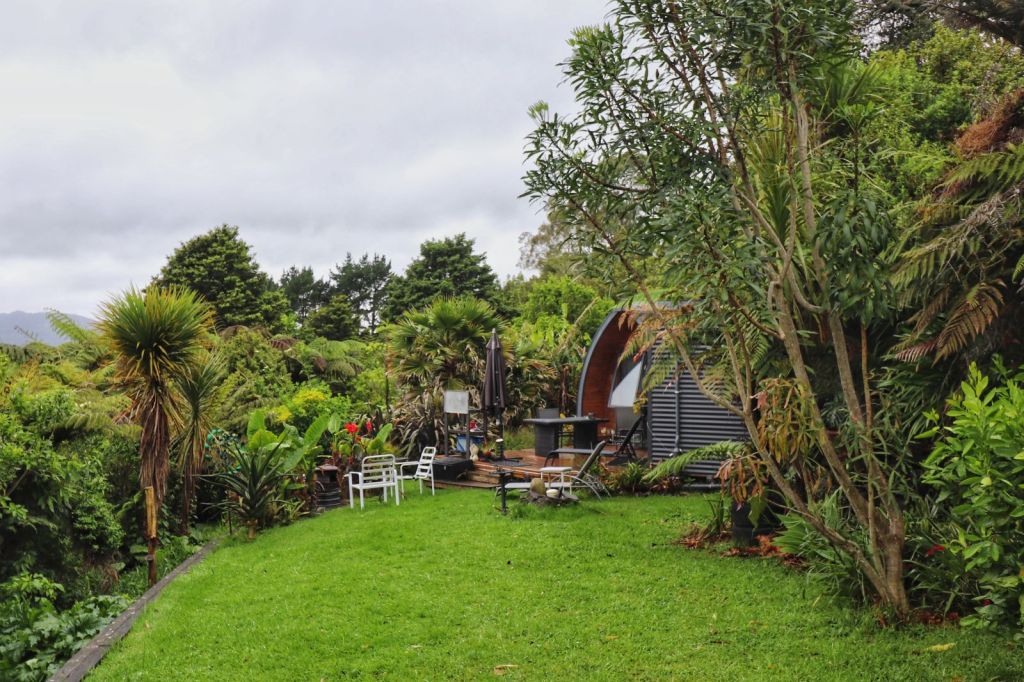
Our last night in Te Ika-a-Māui North Island is in a wooden cabin in the forest, just above the Karangahake Gorge. Karangahake means “humpbacked ridge” or “a call from the other side”, and the latter name speaks to its history as part of a historic pathway between Waikato and the coast. These steep valleys were also home to many Māori who opposed Crown land acquisition and mining in the region, and whose resistance flags once flew along the riverbank as a warning to surveyors and potential miners assessing the land.
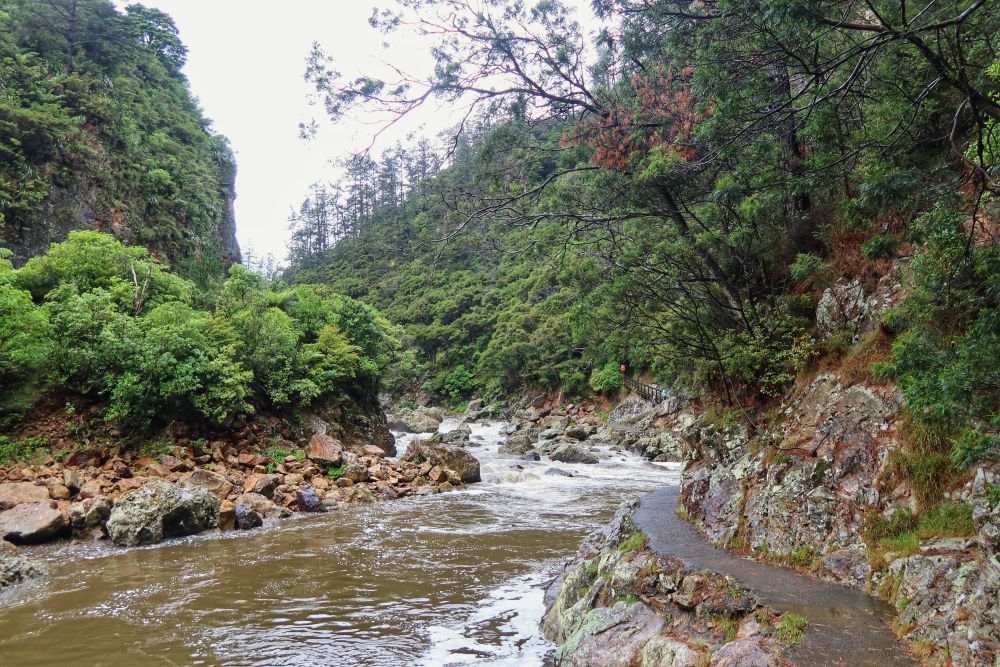
They could only hold in so long. From 1875 on Karangahake was mined for gold and by 1907 around 2000 people lived here in a town with churches, shops, a bowling club and two hotels. Now there are about ten per cent of the residents scattered along the valley and the ruins of the gold mines have been swallowed by the forest.
This morning we followed the riverside trails, walked through the Karangahake Tunnel for more than a kilometre, discovered moss-covered foundation stones, tramway tracks and other traces of the mine beneath the forest canopy, and picked our way through the mine tunnels where windows in the hillside offered views down the gorge where once the low grade ore was tipped down the slope and into the river.
Another day full of stories that may be specific to this place, but which also speak to a wider history, both of these islands and beyond…
Thanks for reading,
Paul & Katrin,
Christchurch, November 2026
Over the next few months we are travelling through Japan and New Zealand, and will be sending out these newsletters from the road to everyone subscribed to The Winding Trail. We hope you enjoy these sketches from our travels.
