
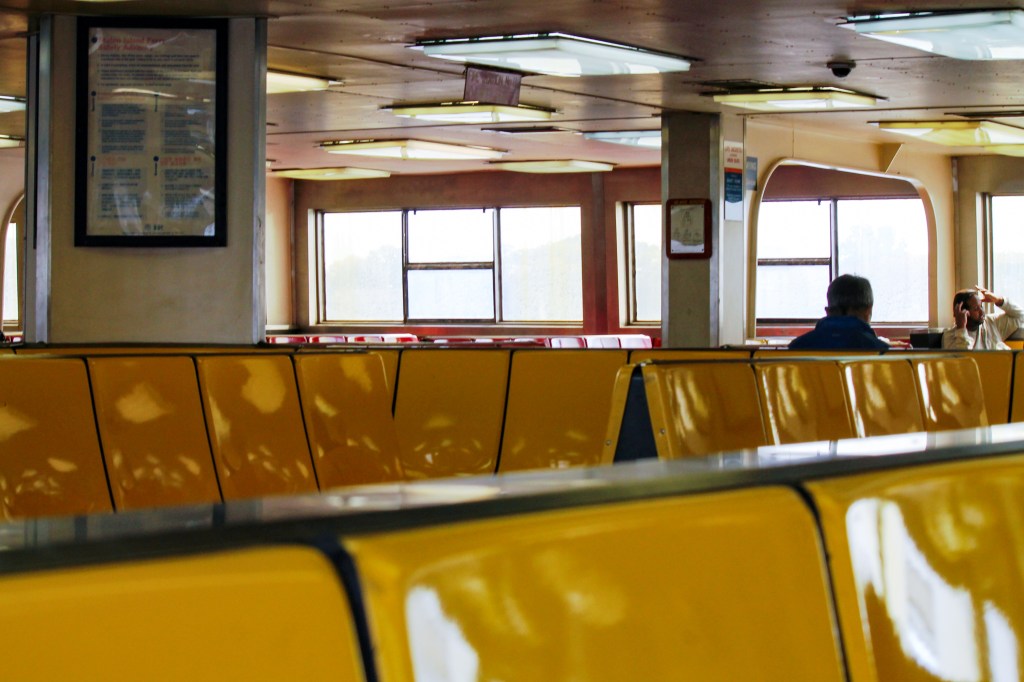
Travel and tourism has been not only at the heart of what both of us have done for a living for more than twenty years, but it is also how we met. In 2002 we were both working at a backpackers hostel in Berlin, and we have worked in this industry one way or the other ever since. We both worked for a youth travel online start-up back before social media even existed, and Katrin has run The Circus Hotel since 2008 and been the CEO of the company for the past four years. Paul is an editor and writer with travel and place at the heart of his work, and helps companies and organisations – including purpose-led travel brands – tell their stories and the impact of what they do.
Travel has been a key part of our working life but also our family life. These are some of the shared experiences that have shaped our relationship to each other. It is how we have tried to educate our daughter, in the joys and mysteries of places where people live differently to us, eat differently to us and, yes, might even think differently to us. It has been about stumbling over our words in a rural French campground, standing atop an Austrian mountain, ducking beneath the curtain in a Hiroshima side street, and showing each other the places that were important to us from the lives we lived before.
We like to move. We like to be outside. We like to discover something new. Near or far.
So every year, around about now when the snowdrops are pushing through a soil hardened by a long Berlin winter, you are quite likely to find one or both of us at the ITB. This trade fair is absolutely enormous, with exhibitors from every aspect of the travel and tourism industry, and while there are far more preferable ways to get your daily steps – and we would much rather be navigating our way across the Welsh hills than from hall 6.2 to 18.1 – it gives us lots to think about, especially around the subject of why it is that we travel in the first place.
If you are reading this, it is probably because you either know us or like to read our stories of people and places, whether far from home or just beyond the front door. On The Winding Trail, and indeed within our personal and professional lives in general, we do try to promote the idea of travel that is curious and conscious, respectful of the places and communities we visit, and that recognises the cost of an industry that makes these experiences possible.
At the ITB, the sheer size of the global tourism market is very clear. Estimates are just that, but the World Travel and Tourism Council projects that this year the total economic contribution of the tourism industry will pass $12 trillion, which is over ten percent of global GDP. Almost 400 million people around the world work in the tourism industry, and it is expected to account for one in eight global jobs by 2035.
The numbers, like the halls of the ITB in Berlin, are hard to comprehend, let alone navigate. But any of us who like to travel, who enjoy discovering new places whether in our home countries or further afield, will have experienced some of the paradoxes that lie at the heart of this massive industry. Tourism both connects cultures but also turns them into commodities. Travellers (like us) seek out authenticity, but our presence can’t help but erode it. And the very act of “discovering” a place, or writing about it, can start to change it in unintended ways.
We don’t have the reach at The Winding Trail just yet to worry too much that our readers are going to swamp the places that we share our stories about, but it all contributes. Both of us can remember the moment that people in “off the beaten track” destinations grew nervous when they learned their home was to be included in the new edition of the Rough Guide or the Lonely Planet. The place that they loved, and they loved sharing with others, was about to change. How best do you manage that process?
The internet, and Instagram in particular, has done the same thing on a scale unimaginable back then. Meanwhile, the growing number of people around the world who can afford to travel has also increased. There is an environmental cost in all of this – tourism’s share of greenhouse emissions is roughly equal to its share of the global economy – and there is a local cost, borne by those who live in the places where travellers flock.
Visit Kyoto or Lisbon, two places we have been to in the last eighteen months, and you can see the effects. And the people who call them home never actually voted for this, and quite often are the ones who pay the price without seeing any of the benefits. This discussion is happening in Berlin too, and Venice and Barcelona, as well as rural communities that have been hollowed out by second homes and AirBnBs.
So what do we do? We certainly appreciate the philosophy behind the slow travel movement, about travelling in a conscious and thoughtful way, maximising expenditure in locally owned businesses and taking time to engage with the places we visit. We also recognise that this can be far more expensive, both in the financial sense but also in the amount of time needed, and is not an option available to everyone.
In Japan, there has been a lot of talk in recent years about encouraging travellers to move beyond the well-trodden routes. That the volume of tourists can be more easily absorbed, with less negative impacts on host communities and with the positive effects shared out more broadly, if people are encouraged to try Sendai instead of Osaka, Aomori instead of Kyoto, or Fukuoka instead of Tokyo.
It’s hard to know what the answer is, and we would love to hear what you think. But one thing we remain convinced of, is that travel can be a force for good, both for the traveller but also their hosts. It is more than 150 years since Mark Twain wrote, “Travel is fatal to prejudice, bigotry, and narrow-mindedness, and many of our people need it sorely on these accounts…”.
More recently, we think of the curiosity and respect of travellers like Anthony Bourdain, and how he encouraged people to, yes, go out into the world and explore it, but was just as concerned about how we should go about it.
We need to be aware of the impact of what we do in all aspects of our life, on the planet and those people that we share it with. But we also need to keep connecting, especially in our increasingly fractured world. Keep exploring. Keep discovering. And keep learning the lessons that travel teaches us.
“If I’m an advocate for anything,” Bourdain wrote, “it’s to move. As far as you can, as much as you can. Across the ocean, or simply across the river. The extent to which you can walk in someone else’s shoes or at least eat their food, it’s a plus for everybody. Open your mind, get up off the couch, move.”
Thanks for reading,
Paul & Katrin
Berlin, March 2026
New on The Winding Trail:
Since we last sent out a newsletter, we have published a long read called Following the line, about finding connection and memories of the coast on a journey along the edge of North Jutland in Denmark.
We also shared our reflections on walking the Yorkshire Three Peaks, as the first of a new series of guides to some of our favourite trails. We walked the Yorkshire Three Peaks in May last year for Pahar Trust Nepal, who work to improve standards of education, health and sanitation in rural communities. If you click on any link in this newsletter, please click on this one and support them in their work.
