
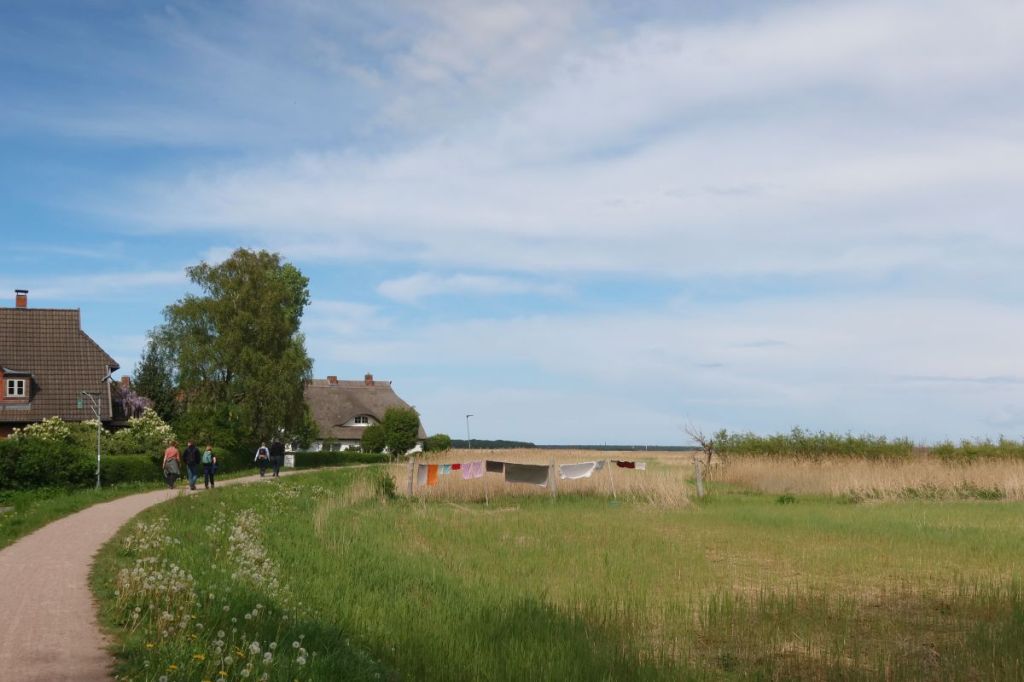
The path leads out from the harbour towards a small settlement of thatched houses that look out across the inland sea. In this part of the world, a brackish lagoon like this is known as the Bodden, and it separates the northern German mainland from the Fischland-Darß-Zingst peninsula on the Baltic shore. We come here on this weekend nearly every year, a tradition that began as a group of high school friends in another century, the group growing over the years to accommodate partners, children and new friends gathered along the way.
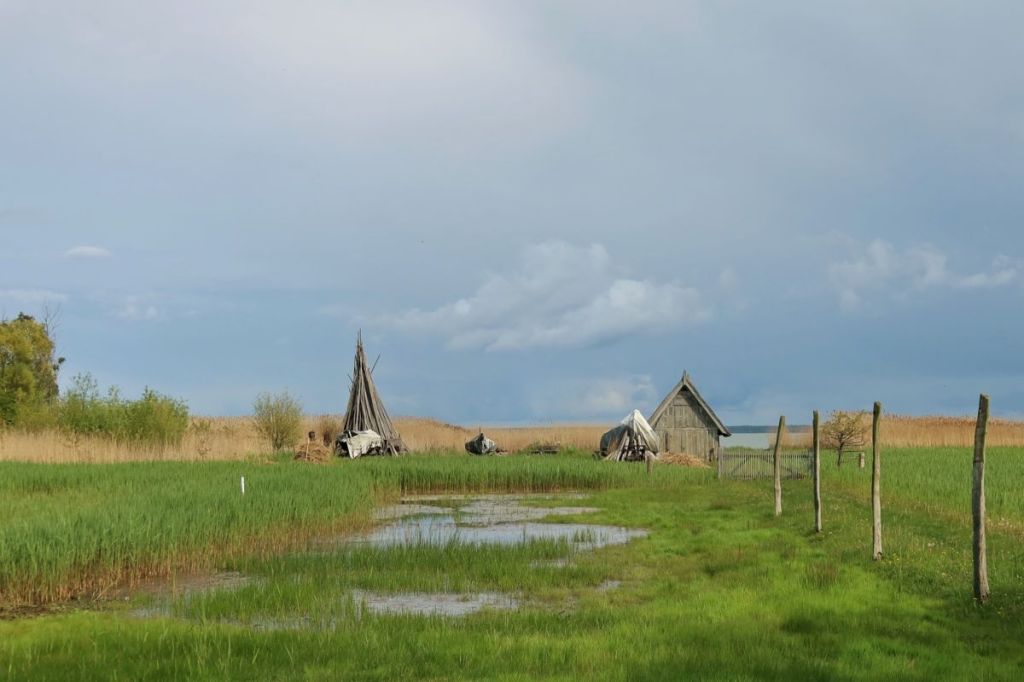
Today we are riding along the Bodden from the old fishing village-turned-resort Wustrow towards another old fishing village-turned-holiday destination Born. On the peninsula, the traditional fishing industry and therefore the harbours of the towns and villages along its length turned away from the Baltic and looked instead out across the Bodden. Tucked in among the reeds along the lagoon shoreline, the harbours are still the domain of the old wooden fishing boats, even if more of their income derives from taking tourists on a trip across the moody, shallow waters rather than from the catch of the day.
At Altenhagen harbour, not far from Ahrenshoop, people eat smoked fish and drink beer in the springtime sunshine. The May holidays have come early this year, and the air is still fresh despite the blue skies. We ride on, following a gravel track between fields where livestock graze and the Bodden lies low beyond the reeds. We spy lapwings dancing on the breeze as a white-tailed eagle soars high above, out on a fishing trip of his own.
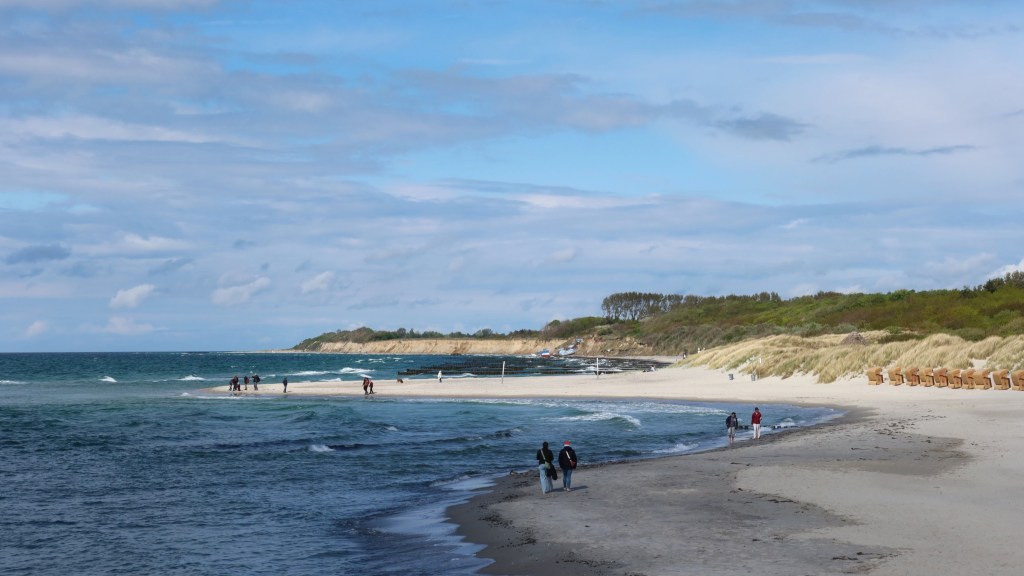
From Born we cross the peninsula, following farm tracks along the edge of the Darß Forest until we reach the high path above the sand cliffs. Fields shine yellow with rapeseed as swallows dart this way and that. On the track we are part of a steady stream of cyclists, walkers and runners taking in the sea air. Down below, the Baltic, where tides don’t really rise or fall, the sea has been whipped up by the wind as kite surfers ride the white horses that race parallel to the shore.
We pass close to the colony of cabins and East German Dachas beneath the poplar trees where we stayed on those first visits all those years ago. The cabin that was built by our friend’s grandfather is long gone, leaving only memories and the stone painted to look like a ladybird that helped the kids find their way home after a trip to the beach. Nowadays we stay in the village by the harbour, but we always make a point of walking once along the track across the fields that took you from the cabin towards the village, for ice cream, waffles and fish rolls. Its part of the tradition.
The things that we do. Today, our bikes carry us past the trail through the woods that leads to where the cabin once stood, as we follow the track atop the cliffs, where erosion has long sent the concrete bunkers of the Second World War down into the shallows where they feel the brunt of the waves. How many times have we made this journey? Soon we will be back in Wustrow and it will be time to stop. For fish rolls or a waffle. A beer or a shandy. A walk along the Bodden or across the fields. A trip to Ahrenshoop. A bike ride and sunset on the beach, however cold it might be.
These are the things that we do when we are here. The things that make it one of our happiest places. Tonight it will already be time to say goodbye to some of the group, those with the longest journeys home who will be leaving before the rest of us are awake. We say goodbye with the same promise that we always make. That we’ll see them again here. Same time, same place. See you next year.
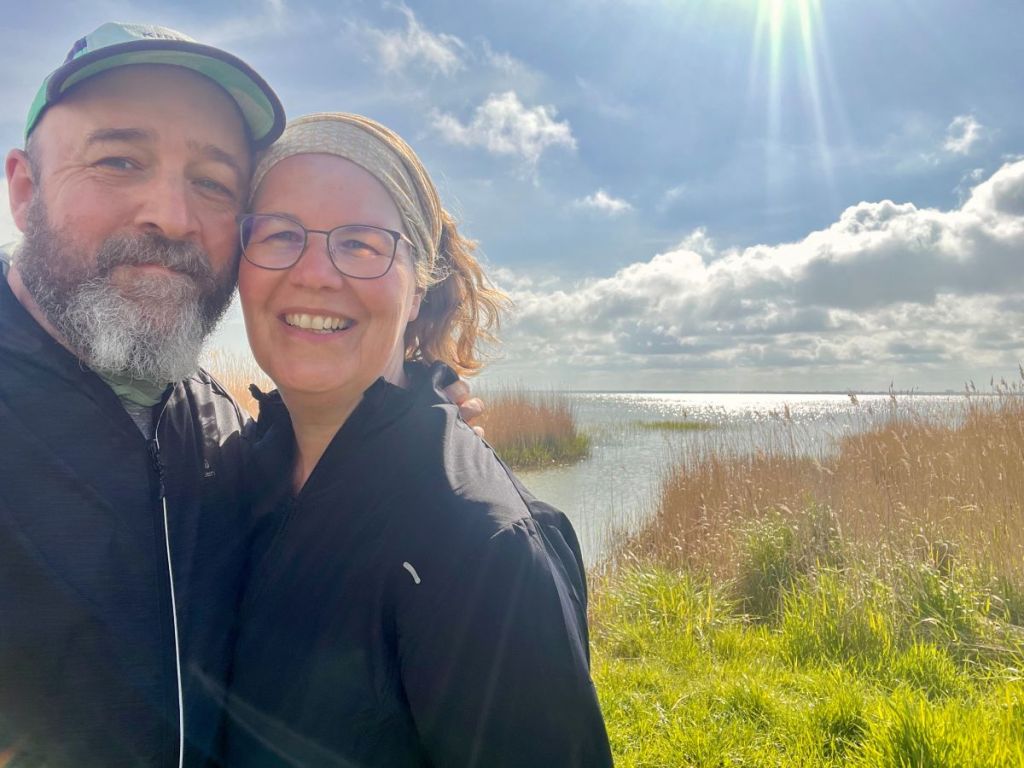
Thanks for reading,
Paul & Katrin
Wustrow, May 2026
New on The Winding Trail:
Our latest long read is all about the mountains and a lifelong distance relationship with the high places:
“There’s nothing like the mountains for making you remember. We had never climbed Yr Aran before, starting off on Yr Wyddfa’s Watkin Path before striking off beneath the old mines to climb up via Bwlch Cwmllan to the summit. But every day in what we used to call Snowdonia cannot help but be full of memories. Of sausage, egg and chips in Pete’s Eats. Of the smell of the outdoor shops in Capel Curig. Of the racing river in Betws-y-coed. Dire Straits on the radio and putting your socks on in the car park at Ogwen…”
From our collection of guides:
Another corner of the Baltic shore, this time in Denmark:
“This is a rumpled sheet of rolling hills, a grassy moorland speckled with juniper and sloe bushes, with the odd conifer plantation here and there. Cattle grazing has long given the hills their bleak and bare look, but appearances can be deceptive. Today, the Mols Bjerge contains almost half of all of Denmark’s wild plant species, with all manner of bird and other wildlife calling the park home…”
Where to go in Denmark: Mols Bjerge
From the archive:
Wustrow and the Bodden features in our reflections on how walking the same paths time and again deepens our relationship with places:
“The Baltic shore, like the coastline of Ynys Gybi, is part of our family. These walks are born of histories that started before we were born, in Wales and the north of England, in Berlin and the GDR. Over time the family stories have become mixed, the histories shared. We walk together in Wales and in Mecklenburg-Vorpommern. We add new memories to those that only some of us remember. And each time we see the same trails along these very different coastlines in new and different ways…”
