
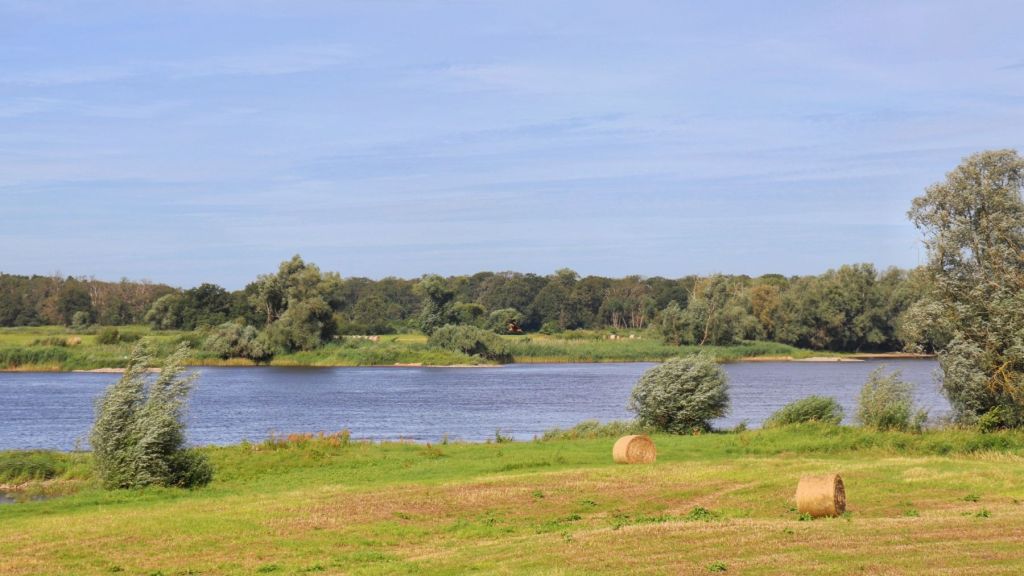
In Dömitz in northern Germany, the river Elbe once marked the border between two Germanys. It is also home to harbour where grain barges from Bohemia and salt transports from Halle used to stop on their journeys north to Hamburg and on to the wider world. It is a place where white-tailed eagles soar over a landscape of riparian forests, floodplains, meadows, heath and fens. It is part of a UNESCO Biosphere that, in turn, is home to a little over 50,000 people, 228 bird species, beavers, otters, wild bees, dragonflies, grasshoppers, eleven species of amphibians and 400 species of plants that are on the Red List of endangered ferns and flowering plants.
“Rivers are life, health, history, story, reflection, transmission, awe,” Amy-Jane Beer writes in her essay ‘What is a River?’. “They can be barriers and obstacles and boundaries, but more often they are corridors, portals, thin places or confluences,” and in Dömitz, on the boundary between Mecklenburg-West Pomerania and Lower Saxony in the North German Lowlands, the Elbe is all of these things. It is a quiet, understated place. It is beautiful but not dramatic. And it has stories to tell.
In this hot summer, the Elbe speaks to us in many different ways. The sandy groynes of the riverbanks grow wider as the water level decreases. In Dresden, dry soil and river meadows mean that they lose their natural cooling effect, causing already high temperatures in the city to rise. Upstream, in the Czech town of Decin, the river levels have dropped far enough to expose the hunger stones, riverbed boulders onto which messages were carved in previous periods of extended drought.
Wenn du mich siehst, dann weine.
If you see me, weep.
The omens are not good. And yet in Dömitz, there are also more positive stories to be found. The UNESCO Elbe River Landscape Biosphere Reserve covers 282,000 hectares across five German federal states, while the Mecklenburg-West Pomerania portion is 461 square kilometres of the river, numerous tributaries and sandy inland dunes between Boizenburg and Dömitz. It was established in 1997 with the goal of sustainable development, in order to protect nature and the environment while finding ways to have a responsible and positive social and economic impact within what it calls the ‘development zone’ of the reserve.
Through its projects of preservation, restoration and development, the reserve also works to deliver wider benefits, including the mitigation of climate change (through the locking away of carbon) and resilience to the impacts of climate change (by buffering against floods and fires). It does this by reversing the drainage of flood meadows and the deconstruction of human-made embankments as a means to the restoration of habitats. Having intact floodplains, for instance, gives the river the opportunity to store water during wet periods, limiting floods downstream during heavy and unpredictable rainfall while maintaining wet grasslands and fens during times of drought.
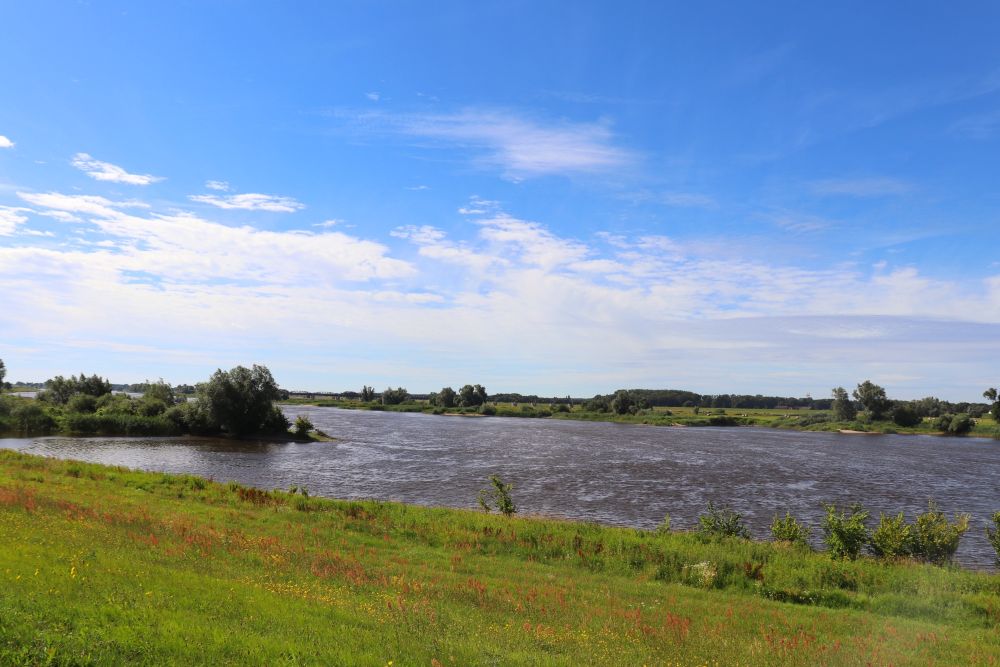
This is important because these fens can hold more carbon per hectare than almost any other habitat, but only if they stay wet. Floodplain forests also add further carbon storage, while all of these alongside the wet meadows act as natural firebreaks and make wild fires less likely to take hold. Dry heaths are especially fire prone, but these can be managed through livestock grazing, which keeps the fuel load down. In the end, it is an argument for a different type of intervention.
The story of the Elbe in Dömitz and the restoration of landscapes along the river there comes to mind because of recent headlines in the UK blaming rewilding and other nature restoration projects for the wildfires experienced across the country. Organisations such as Rewilding Britain, who are working towards a goal of helping to rewild 30% of Britain’s land and sea by 2030, have been quick to counter these sensationalist claims.
Their recent blog article dealing with the rise of wildfires in Britain and how creating more complex, wet landscapes can mitigate the risk speaks to what is being developed along the Elbe river. As in Germany, it is not about “leaving the land alone” but about finding a way to manage the land to create more complex and resilient ecosystems:
Restoring native habitats so that soils are healthy and water-retaining, and so that native trees and plants are present in all their variety, makes landscapes less vulnerable to catching fire and reduces the chances of it spreading.
As healthy peatlands and native woodlands are also fantastic carbon dioxide sinks, the very same nature-based solutions for reducing wildfire risk also offer a longer-term solution to help tackle the causes of climate change at its very root.
Paul has been doing some work with Rewilding Britain this summer, and one of the most inspiring things about the organisation, as well as projects such as those to be found in Dömitz and the Elbe River Landscape, is the fact that there are still stories of hope to be found at a time when things can feel ever so desperate. If you are interested, please take some time to explore and support the work Rewilding Britain is doing, and if you are in the right corner of Germany, the information centre in the old fortress at Dömitz has exhibitions on the work done in the Elbe Valley but also the global network of biosphere reserves.
We also wanted to use this summer postcard to thank everyone for subscribing to The Winding Trail. It is really wonderful to be able to share what we do with you all. We have decided that we will in the future share with you by email not only these postcards but also our new long reads and field notes articles when we publish them. We hope this is all okay for you and that you’ll continue to stay subscribed and follow our adventures beyond the front door.
As always, you’ll find some links to essays, articles and guides from the archive below.
Thanks for reading,
Paul & Katrin
Berlin, August 2026
New on The Winding Trail:
“This is Switzerland’s largest contiguous vineyard and the poetry in the wine, we have been told, is in the fact that the grapes are grown in the land of three suns. Sitting against an old stone wall in the midday heat, it is possible to understand where the idea came from. The first sun is high in the sky above our head. The second is reflecting in the waters of the lake below. And the third is radiating out around us, stored in the ancient rock upon which the vines grow…”
On the terraces – walking the vineyards of Lavaux
Our latest mini-guide – São Miguel, Azores:
“At Sete Cidades the twin lakes of green and blue lie in the base of the old volcano. In Furnas, you can eat stew that has been cooked in the bubbling pools of the caldieras before soaking in the thermal baths of the mineral-rich waters. You can hike the rim of a volcano, follow a coastal path above black cliffs or a red-dirt track through some of Europe’s only tea plantations, explore the hydrangea-lined back lanes of the island interior or follow a steep trail through the forest to swim beneath waterfalls in hidden pools…”
Where to go in Portugal: São Miguel, Azores
From the archive – on why we travel and how we do it:
“A place like Preikestolen takes us to the heart of the biggest issue when it comes to contemporary travel: the sheer numbers of visitors and the impact they have, from the local and global ecology to the communities that both live from tourism but also are on the brink of collapse under the weight of it. As responsible travellers we want to weigh up the costs of our trip in all the different ways, from the carbon footprint of travelling at all to decisions around where we will spend our time once we have decided to go. The answers are not easy…”
